

A German court has imposed a life sentence on a 25-year-old Afghan national after finding him guilty of intentionally driving a vehicle into a public gathering in Munich, an attack that claimed two lives and left dozens injured.
The incident occurred on February 13, 2025 when the convicted man, identified under German privacy regulations as Farhad N, steered his Mini Cooper into a trade union demonstration involving about 1,400 participants in the city centre.
Among those struck were a 37-year-old woman and her two-year-old daughter, both of whom later died from their injuries.
More than 40 others sustained injuries, with several reported to be in critical condition.
The Munich Higher Regional Court concluded that the crime was exceptionally grave, a ruling that significantly reduces the likelihood of parole after the standard 15-year minimum term for life imprisonment.
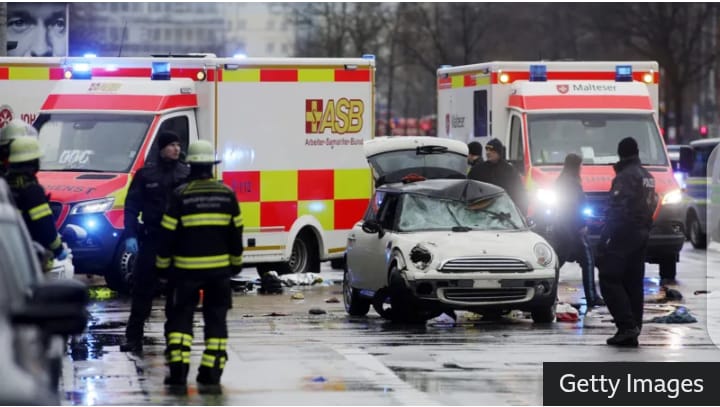
The court found Farhad N guilty of two counts of murder, 23 counts of attempted murder, as well as multiple offences related to causing serious bodily harm.
During sentencing, the presiding judge stated that the attack was carried out with the intention of randomly killing people in Germany.
According to the court, the accused believed his actions would earn divine approval and demonstrate religious devotion.
Prosecutors argued that the attacker viewed the assault as retaliation for the involvement of the United States and other Western countries in conflicts in Gaza and Afghanistan.
They also cited resentment, frustration and personal bitterness as factors that contributed to the crime.
Defence lawyers sought a 15-year custodial sentence instead of life imprisonment and requested that their client be admitted to a psychiatric institution, claiming he displayed symptoms associated with schizophrenia.
The convicted man retains the legal right to challenge the judgment through the appeals process.
Authorities disclosed that Farhad N entered Germany alone in 2016 during the peak of Europe’s migration crisis.
Although his asylum application was unsuccessful, he remained in the country legally after deportation was not carried out.
Officials said he held a valid work permit and had been employed as a store detective and in the private security sector.
Investigators also noted that he had no previous criminal record and regularly shared fitness and religious content on social media.
The Munich attack was one of several violent incidents that intensified political debate over immigration in Germany, where the large-scale arrival of asylum seekers in 2015 and 2016 has remained a highly contentious issue and has contributed to growing support for the far-right Alternative for Germany (AfD) party.
By: Magdalene Agyeiwaa Sarpong