

The energy minister described it as a “major milestone” for the East African nation
Tanzania has discovered an estimated 223 billion cubic feet of natural gas in the Mnazi Bay region, marking the country’s first major find in ten years.
Energy Minister Juma Homera joined officials at a ceremony held at the Kasa-1X ST2 well, operated jointly by the Tanzania Petroleum Development Corporation (TPDC) and French energy company Maurel & Prom.
The minister described the discovery, equivalent to 6.3 billion cubic metres, as a significant achievement for Tanzania’s developing petroleum industry.
Production from the site is expected to commence early next month, with the aim of strengthening local energy supplies.
The East African nation currently holds approximately 57.54 trillion cubic feet of proven natural gas reserves.
Homera explained that the latest development would help provide dependable, affordable and environmentally cleaner energy as industrialisation and other commercial activities drive up consumption.
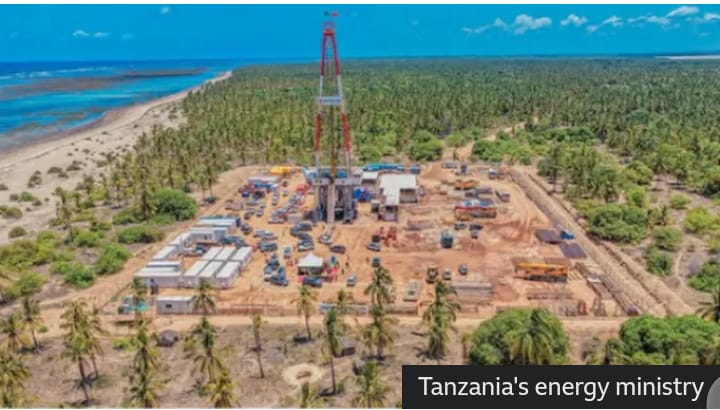 Gas from the field will be for domestic and industrial power generation and also for vehicles
Government figures for 2024 indicate that gas-powered facilities generated almost 80 per cent of Tanzania’s electricity.
Authorities have also promoted compressed natural gas (CNG) as an alternative fuel for automobiles.
Several processing facilities and refuelling stations have been established, particularly in Dar es Salaam, the country’s largest city.
Some motorists have adopted dual-fuel technology, enabling their vehicles to run on both petrol and locally sourced gas, which is generally less expensive.
Tanzania’s gas exploration history dates back to 1974, when the first deposit was identified on Songo Songo Island in the Lindi region.
A subsequent discovery occurred at Mnazi Bay, in the neighbouring Mtwara region, in 1982.
Commercial production from the two locations began in 2004, encouraging additional exploration across inland and offshore areas.
In 2016, the country recorded its largest individual discovery, estimated at 2.7 trillion cubic feet.
By: Magdalene Agyeiwaa Sarpong