

The government of Ghana has justified its acquisition of a new presidential aircraft despite growing public disapproval over the expenditure, particularly at a time when households are grappling with rising living expenses.
The purchase of a French-built Falcon 6X, reportedly valued at $61 million, has generated political controversy, with opposition lawmakers questioning the administration’s spending priorities under President John Dramani Mahama.
However, authorities maintain that the investment is financially sustainable, citing improvements in the country’s economic performance and the need to replace an ageing aircraft that has experienced repeated technical difficulties.
The jet, manufactured by French aviation firm Dassault Aviation, was officially handed over to the Ghana Air Force on Monday.
Its procurement received parliamentary approval in December last year under a wider military aviation upgrade programme, which also covers the acquisition of four Airbus helicopters.
The aircraft’s arrival, marked by a ceremonial water salute, attracted considerable criticism from opposition figures and social media commentators over the timing and financial implications.
Critics have also drawn attention to President Mahama’s previous opposition to acquiring another presidential aircraft while serving in opposition, raising questions about the change in his administration’s position.
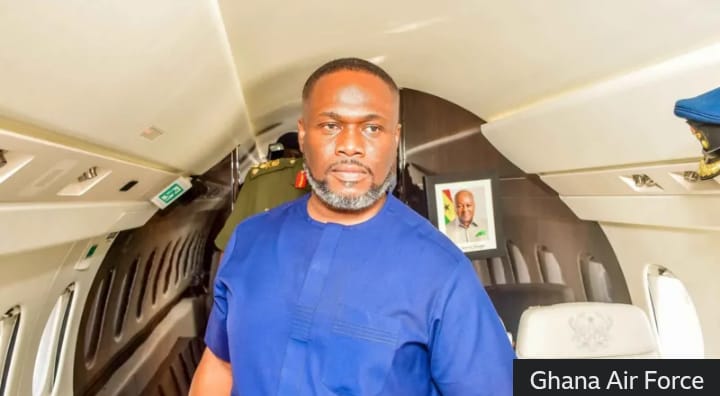
Defence Minister Kenneth Adjei welcomed and inspected the new jet on Monday
Member of Parliament Samuel Abu Jinapor challenged the government’s decision, arguing that the substantial expenditure was inappropriate given persistent economic hardship and limited employment opportunities for young people.
He accused the governing National Democratic Congress (NDC) of adopting contradictory positions, recalling its earlier resistance to similar proposals when it was outside government.
Mr Jinapor further demanded disclosure of the financial arrangements, procurement procedures and economic considerations behind the transaction.
Public reactions have also intensified online, with some commentators suggesting that the funds could instead support recruitment in essential sectors, including education and healthcare.
Defending the acquisition, Chairman of Parliament’s Defence Committee, Peter Lanchene Toobu, explained that the NDC had never rejected the need for a replacement presidential aircraft.
He said the party’s earlier reservations concerned the country’s economic condition at the time, particularly when Ghana was negotiating a $3 billion support programme with the International Monetary Fund (IMF).
Mr Toobu argued that improved macroeconomic indicators, currency appreciation and reduced import expenses had created more favourable conditions for the investment.
He also maintained that the government financed the purchase without resorting to additional borrowing.
Government spokesperson Kwakye Ofosu similarly rejected claims that the aircraft represented an irresponsible allocation of public resources, pointing to declining construction costs and lower interest rates as signs of economic improvement.
Citing the reduced market price of cement, he explained in an interview with JoyNews that a bag which previously sold for GH¢115 could now be purchased for approximately GH¢80.
Questions have also emerged regarding the aircraft’s onboard facilities following reports suggesting it contained a private bedroom and bathroom.
Mr Ofosu dismissed those descriptions, clarifying that the aircraft features adjustable seats capable of converting into sleeping spaces but does not have a separate bedroom or bathroom.
According to the administration, the Falcon 6X will take over from the 16-year-old Falcon 900EX, which has encountered persistent mechanical challenges, including fuel tank corrosion and leakage.
The previous aircraft was reportedly stranded in France for several months in 2025 for maintenance and repair work.
Officials say the replacement offers improved operational capacity, greater flying distance and reduced dependence on intermediate refuelling during overseas assignments.
Meanwhile, University of Ghana economist Professor Godfred Alufar Bokpin acknowledged the importance of presidential security but questioned whether the current economic climate justified the investment.
He cited unemployment, infrastructure deficits and ongoing financial constraints as factors that make the timing controversial.
Professor Bokpin urged the government to publish a comprehensive assessment comparing the financial benefits of purchasing the aircraft with alternative arrangements, including leasing, to demonstrate how the decision serves the national interest.
By: Magdalene Agyeiwaa Sarpong