

Image@ BBC
Demonstrations broke out in several Ukrainian cities on Thursday following President Volodymyr Zelensky’s unexpected decision to remove Defence Minister Mykhailo Fedorov from office, sparking criticism from sections of the military, political observers and the public.
Hundreds of protesters, many of them young people, assembled in Kyiv carrying placards defending the former minister and condemning the decision.
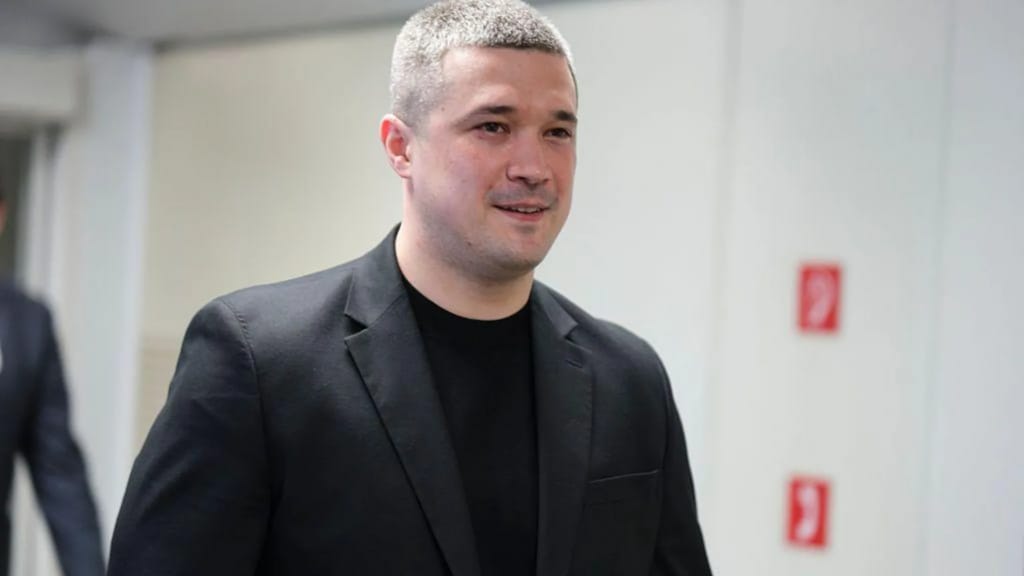 Defence Minister Mykhailo Fedorov
Similar rallies were reported in other parts of the country as demonstrators voiced fears that the leadership change could undermine Ukraine’s war effort.
The presidency has not provided an official explanation for Fedorov’s dismissal, a move that has generated widespread debate at a time when the country continues to confront Russia’s full-scale invasion.
Parliament was expected to consider the nomination of Interior Minister Ihor Klymenko as the new defence minister later on Thursday.
Fedorov, 35, assumed the defence portfolio in January and quickly gained recognition for introducing reforms aimed at improving efficiency, tackling corruption and strengthening battlefield decision-making through technology and data-driven strategies.
Political analysts have suggested that disagreements with Commander-in-Chief Oleksandr Syrskyi over military priorities may have contributed to his departure.
Others argue that concerns over the pace of reforms to Ukraine’s mobilisation system may also have influenced the decision.
The dismissal has drawn strong reactions from serving military personnel.
A soldier identified as Oleksandr described the move as President Zelensky’s “biggest mistake,” saying confidence in Fedorov’s leadership had encouraged many volunteers to enlist.
Speaking during a protest in central Kyiv, demonstrator Maria Lavrynets said the former minister had delivered measurable improvements for the armed forces and deserved continued public support.
Before taking charge of the defence ministry, Fedorov served as Ukraine’s minister responsible for digital transformation, where he helped establish the volunteer-led “IT Army of Ukraine” to counter Russian cyber operations.
He also spearheaded the widely recognised Army of Drones initiative, expanded the military’s use of unmanned technology and introduced digital systems to improve operational planning and resource management.
During his tenure, Ukraine intensified drone operations against Russian positions, including strikes targeting the occupied Crimean Peninsula.
Fedorov also urged SpaceX founder Elon Musk to restrict Russia’s use of Starlink satellite services for military operations, a development that reportedly disrupted Russian battlefield communications.
Following his removal, Fedorov issued a statement highlighting the progress made under his leadership and pledged to continue supporting Ukraine’s defence through technological innovation and strategic reforms.
His dismissal has also prompted resignations within the armed forces.
Pavlo Yelizarov, a senior drone commander and deputy commander of the Ukrainian Air Force, stepped down in protest, warning that the decision could weaken Ukraine’s military capabilities.
The controversy comes as Ukraine continues efforts to modernise its armed forces while sustaining resistance against Russian aggression, with many observers watching closely to see how the change in defence leadership will affect the country’s wartime strategy.
By: Magdalene Agyeiwaa Sarpong