

Qatar’s midfielder Assim Madibo has been handed a five-match suspension following a reckless challenge that led to a severe injury for Canada’s Ismael Kone during the 2026 FIFA World Cup.
Madibo received a direct red card for the foul in Canada’s commanding 6-0 win over Qatar in Vancouver last Thursday.
The FIFA Disciplinary Committee announced the decision on Wednesday, citing “serious foul play as the basis for the suspension”.
The ruling is open to appeal.
The ban effectively concludes Madibo’s participation in the tournament, excluding him from Qatar’s remaining World Cup matches, including their recent 3-1 loss to Bosnia and Herzegovina in Seattle.
Canada’s landmark victory was marred by a horrific injury to Kone, who suffered fractures to both the tibia and fibula in his left leg as a result of the tackle.
The incident unfolded in the 51st minute when Madibo challenged Kone from behind.
Teammates quickly called for medical assistance as Kone lay on the ground in evident distress.
He was later carried off on a stretcher and underwent successful surgery to mend the fractures.
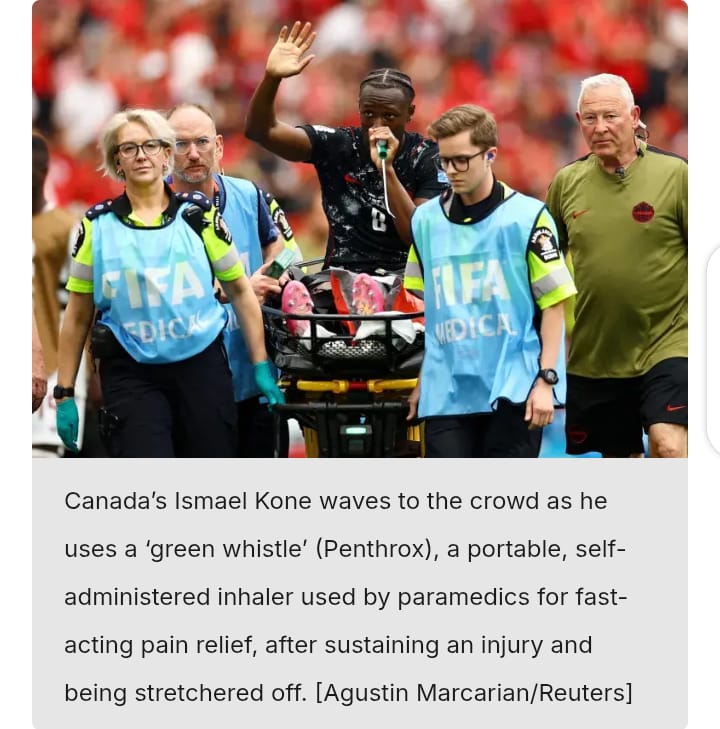
Despite the gravity of his injury, Kone received a warm standing ovation from fans as he sat up on the stretcher and waved goodbye while leaving the field.
In the aftermath of the incident, Canadian players united in support of their injured teammate.
Nathan Saliba, who came on to replace Kone and netted Canada’s fourth goal, honored him by running to the sideline with a replica of Kone’s jersey.
He also pointed to Kone’s number eight shirt in a heartfelt display of solidarity.
While significant, Madibo’s five-match suspension does not rank among the longest penalties in World Cup history.
In 2014, Uruguay’s Luis Suarez faced a nine-match international ban and a four-month suspension from all football-related activities after biting Italy’s Giorgio Chiellini during the tournament in Brazil.
Similarly, Italy’s Mauro Tassotti received an eight-match suspension for elbowing Spain’s Luis Enrique during the 1994 World Cup.
Nonetheless, Madibo’s punishment stands as one of the most stringent disciplinary measures issued at the 2026 tournament, highlighting FIFA’s dedication to ensuring player safety on football’s grandest platform.
By: Magdalene Agyeiwaa Sarpong