

Nigerian athlete Rukayat Taiwo Suleimon has made history after becoming the first visually impaired woman to win a gold medal at the World Sambo Cup, despite taking up the martial art only this year.
The 32-year-old secured the women’s 54kg title at the 2026 competition in Yerevan, Armenia, after overcoming Uzbekistan’s Charos Ortikova in the final during her international debut.
Her triumph marked a significant breakthrough for African female competitors, as women with visual disabilities were included in the tournament for the first time.
Another Nigerian, Elizabeth Aseso, also represented the continent in the 59kg division.
Sambo, a combat discipline developed by the Soviet Red Army during the 1920s, incorporates elements of judo and wrestling, including throwing and ground-pinning techniques.
Suleimon’s success follows years of determination after glaucoma complications and unsuccessful surgical procedures left her completely blind in 2009.
The sudden change affected her social life, with several friends distancing themselves and leaving her emotionally distressed. However, her circumstances began improving when she enrolled at a vocational institution for visually impaired individuals in Lagos.
An introduction to a para-athletics instructor opened the door to competitive sports, beginning a journey that has produced more than 20 national medals since 2011.
She previously participated in sprinting, discus and shot put before progressing into judo and sambo.
The Nigerian described sporting activities as a major source of confidence and personal fulfilment, insisting that visual impairment should never prevent anyone from pursuing excellence.
Her achievements have equally earned admiration from relatives, particularly her twin sister, Ganiyat Kehinde Suleimon, who said the condition had never made her sibling a burden to the family.
National sambo trainer Olugbenga Adekahunsi also praised her physical strength and determination, expressing confidence in her prospects of becoming an outstanding competitor.
Despite her international recognition, Suleimon has raised concerns about inadequate assistance from authorities, explaining that limited financial resources and transportation expenses make regular training difficult.
She revealed that travelling across Lagos often requires leaving home as early as 5:30am to reach practice sessions on schedule.
Her concerns reflect broader challenges confronting Nigerian para-athletes, including insufficient funding, poor training infrastructure and limited institutional assistance.
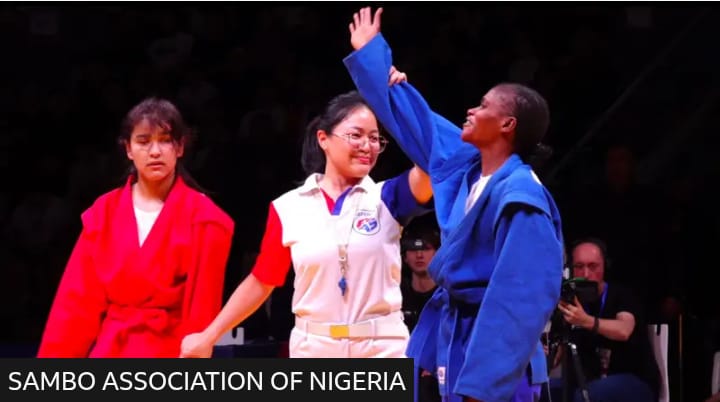 Suleimon is set to compete at the World Sambo Championships in Uzbekistan in November
Vice-president of the Sambo Association of Nigeria, Sherif Hammed, acknowledged that inadequate resources continue to undermine the development of talented competitors, particularly those with visual disabilities.
Meanwhile, Nigeria has recorded other notable achievements in blind sambo. Samuel Oladele Kekere became the first visually impaired African to participate in the World Sambo Championships in Kazakhstan two years ago, before Sodiq Ajibade secured bronze at the following edition in Kyrgyzstan.
Suleimon subsequently failed to extend her World Cup achievement at the World Sambo Championships in Tashkent, Uzbekistan, where she lost her opening encounter to Moldova’s Ina Cernei.
Nevertheless, the champion remains determined to inspire other visually impaired Africans and secure further international honours for Nigeria.
By: Magdalene Agyeiwaa Sarpong