

Tensions between residents and migrants in the Spanish territory of Ceuta have intensified, with confrontations, attacks on makeshift camps and growing fears over public safety following a massive influx from neighbouring Morocco last month.
The unrest comes weeks after an estimated 72,000 people reached the North African enclave on July 30 and 31.
Most returned across the border shortly afterwards, while several thousand are still stranded in the territory, including large numbers of unaccompanied minors.
According to Ceuta’s mayor, at least 100 people lost their lives during the crossing.
Many of those who remain have been sleeping in open spaces, particularly along beaches and public roads.
Demonstrations opposing the presence of migrants were initially peaceful but have recently taken a more aggressive turn.
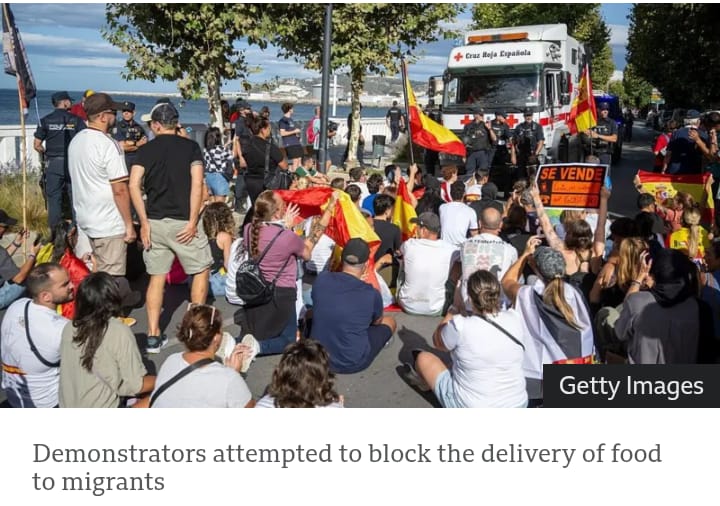
On Thursday, groups of residents reportedly obstructed Red Cross workers who were attempting to provide food and drinking water to people staying at Trampolín beach.
The situation later deteriorated when sections of the makeshift settlement were set ablaze.
Police intervened as clashes broke out between officers and some demonstrators.
The disorder followed the detention of 12 migrants accused of attacking a military vehicle with stones.
The incident allegedly shattered the vehicle’s windows and left four soldiers injured.
There were also reports of groups of residents chasing migrants through parts of the city.
Media workers covering the developments have complained of intimidation and threats.
Ceuta’s conservative mayor, Juan Jesús Vivas, said residents had endured considerable pressure and deserved a return to ordinary life.
He argued that Spain’s standing was at stake as authorities struggled to restore calm.
The socialist administration of Prime Minister Pedro Sánchez has urged political leaders and the public to avoid inflammatory language.
Government officials have accused the opposition People’s Party (PP) and the far-right Vox of worsening the atmosphere.
Vox lawmaker José María Figaredo is under investigation over remarks made shortly after the influx, when he called for migrants to be “hunted down, one by one”.
Interior Minister Fernando Grande-Marlaska criticised statements that he said were encouraging hostility towards foreigners and deepening divisions within society.
PP lawmaker Javier Celaya, who represents Ceuta, meanwhile accused Madrid of prioritising the migrants while overlooking the concerns of local inhabitants.
All political groups represented in Ceuta’s assembly signed a statement on Friday denouncing violence.
The central government has since taken direct control of the response, replacing local management after criticism that officials had reacted too slowly.
Defence Minister Margarita Robles also expressed regret to residents who felt neglected, as Madrid announced plans to reform immigration legislation.
A major source of disagreement is the government’s proposal to temporarily accommodate migrants in public facilities, including sports complexes.
Authorities say the move would allow officials to identify those entitled to protection and facilitate the return of people who do not qualify for asylum.
However, Mr Vivas and many residents oppose the plan, arguing that relocating the newcomers into populated neighbourhoods could increase tensions.
Questions have also emerged over how the unprecedented border crossing was organised.
Some politicians from both the right and far left have suggested that Morocco may have played a role, citing previous accusations that Rabat has used migration pressure to influence Spain.
The Sánchez administration rejects that interpretation and has instead blamed criminal networks involved in migrant smuggling.
Madrid maintains that Morocco remains a cooperative partner and points to the rapid repatriation of most of those who entered.
The episode has nevertheless revived concerns over Spain’s control of Ceuta and nearby Melilla, both of which Morocco claims as its own.
Moroccan officials have renewed those territorial assertions in recent weeks.
Spanish Foreign Minister José Manuel Albares rejected the claims, insisting that Madrid would not enter discussions with Morocco over Spain’s territorial integrity.
By: Magdalene Agyeiwaa Sarpong