

Traditional leaders attend a parliamentary session on the Human Sexual Rights and Family Values Bill in Accra, Ghana, May 29, 2026.Image@ REUTERS/Francis Kokoroko
President John Dramani Mahama is now facing a defining test of his administration’s stance on human rights as Ghana’s parliament handed him one of its most contentious pieces of legislation in years.
Lawmakers on Friday passed the Human Sexual Rights and Family Values Bill, 2025 — commonly known as the anti-LGBTQ bill — by a voice vote after the Constitutional and Legal Affairs Committee unanimously recommended its adoption, first deputy speaker Bernard Ahiafor announced. The bill now awaits Mahama’s signature to become law.
While proponents argue the legislation upholds traditional Ghanaian family values and cultural norms, critics warn of devastating consequences for human rights, public health, and the nation’s economic outlook. The bill was introduced last year shortly after Mahama took office, and lawmakers from his National Democratic Congress party had been urged by religious leaders and other supporters of the bill to vote on it.
The bill’s history stretches back to 2021, when it was first introduced by a group of lawmakers led by Ningo-Prampram MP Sam George and received support from several religious groups, traditional leaders and conservative organisations. Lawmakers unanimously passed an earlier version in February 2024, but due to legal challenges, former President Nana Akufo-Addo was unable to sign it into law. The bill eventually lapsed in January 2025 after the dissolution of the Eighth Parliament without receiving presidential assent.
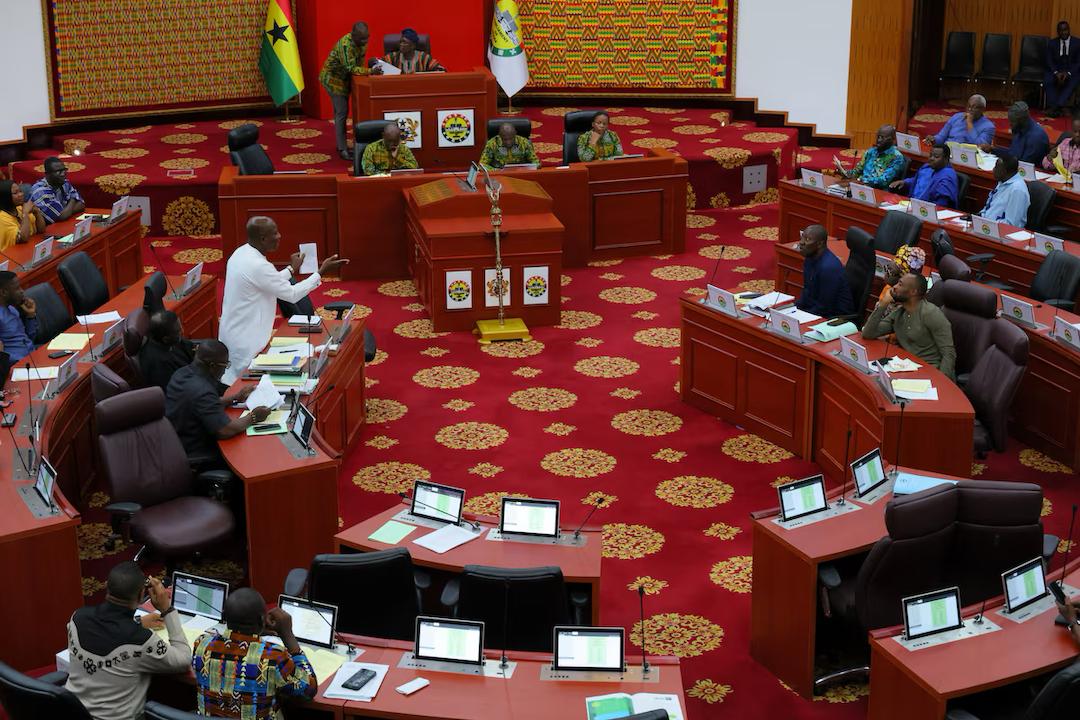 Ghanaian lawmakers attend a parliamentary session on the Human Sexual Rights and Family Values Bill in Accra, Ghana, May 29, 2026. Image@ REUTERS/Francis Kokoroko
The revised legislation carries significantly expanded provisions. It maintains the existing penalty of up to three years in prison for same-sex sexual acts, while also banning “funding, sponsorship or promotion” of LGBTQ acts, with prison terms ranging from three to five years. It further introduces a “duty to report” prohibited LGBTQ acts to police or other authorities, with violators facing up to three years behind bars, and amends Ghana’s Extradition Act of 1960 to make offences under the new law extraditable.
The revised version does, however, include exemptions for some professionals and institutions. Lawyers providing legal services or representation, journalists and media organisations reporting on LGBTQ-related issues, and doctors, counsellors and mental health professionals offering care to LGBTQ persons will not face sanctions under the law. Despite these changes, the Minority Caucus strongly opposed the amendments during parliamentary debate, at one point threatening to withdraw the bill prior to its passage.
Ghana’s move fits a broader regional pattern. Senegalese President Bassirou Diomaye Faye in March signed a bill doubling the maximum prison term for same-sex sexual acts to 10 years and criminalising any efforts to promote homosexuality. In September last year, lawmakers in Burkina Faso voted to criminalise same-sex sexual acts for the first time and to criminalise “behaviour likely to promote homosexual practices and similar practices.”
The bill’s passage thrusts Ghana into the global spotlight, positioning it among African nations enacting increasingly stringent laws targeting sexual minorities, and has drawn immediate condemnation from international human rights organisations.
By: Andrews Kwesi Yeboah