

With the number of global conflicts rising and multilateral cooperation increasingly strained, the Norwegian Nobel Committee finds itself sifting through one of its most diverse candidate pools in recent memory — 287 nominations for the 2026 Peace Prize, including what is widely expected to be U.S. President Donald Trump.
Kristian Berg Harpviken, the committee’s secretary since January 2025, announced the figures on Thursday, noting that 208 of the nominees are individuals and 79 are organisations. He described the composition as unusually fresh. “Since I am new in the job, one of the things that has to some extent surprised me is how much renewal there is from year to year on the list,” he said.
The leaders of Cambodia, Israel and Pakistan have all publicly declared they nominated Trump for the prize. Those submissions, had they been made, would have been lodged between spring and summer 2025 — within the January 31 deadline. But because nominations remain classified for 50 years, there is no independent way to verify the claims, and Harpviken declined to confirm whether the American president is on the list. Crucially, a nomination does not constitute an endorsement by the committee or the broader Nobel institution.
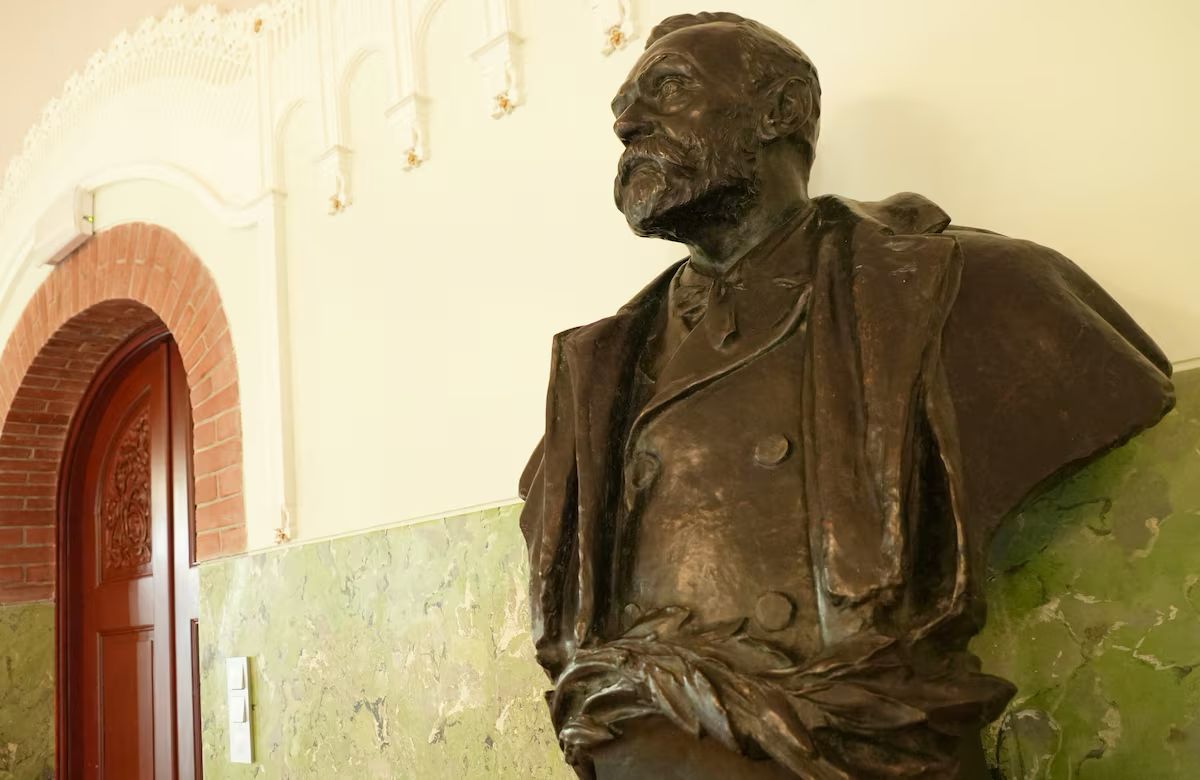 A bust of Alfred Nobel is placed at the Norwegian Nobel Institute, where the laureate of the Nobel Peace Prize is announced, in Oslo, Norway, October 10, 2025. REUTERS/Tom Little
Eligibility to nominate is itself extensive: it extends to members of national governments and parliaments, sitting heads of state, university professors of history, law, social sciences and philosophy, and past Peace Prize laureates, among others — a framework that helps explain how the field reaches nearly 300 candidates in a single cycle.
Speculation about the eventual winner is already running high. Betting markets have thrown up an eclectic mix of potential laureates, among them Yulia Navalnaya — widow of Russian opposition figurehead Alexei Navalny, who died in a Siberian penal colony in February 2024 — as well as Pope Leo and Sudan’s Emergency Response Rooms, a volunteer network providing humanitarian relief amid the country’s devastating civil war.
Harpviken also struck a sombre note on Thursday regarding the health of Narges Mohammadi, the Iranian human rights defender and 2023 Peace Prize laureate, who suffered a heart attack while imprisoned in Tehran. Her supporters warned on Wednesday that her life was in immediate danger. “Her sister was able to visit her in prison yesterday and the reports coming out after that are actually quite alarming as to her health condition,” Harpviken said. He appealed directly to Iranian authorities: “We see there is a lot of international pressure now. So we hope that the Iranian authorities do pay attention to that and release her so that she can have proper medical treatment.”
The Arctic has surfaced as a distinct thread running through this year’s nominations. Norwegian parliamentarian Lars Haltbrekken confirmed he submitted the names of U.S. Senator Lisa Murkowski of Alaska and Aaja Chemnitz, a Greenlandic representative in the Danish parliament. “Together they have worked relentlessly to build trust and to secure a peaceful development of the Arctic region over many years,” Haltbrekken said. The nomination carries particular resonance given Trump’s persistent campaign to bring Greenland under American control — a push that has unsettled Denmark, a NATO ally, and put the future of the strategically vital island at the centre of transatlantic tensions.
Despite the turbulent international climate, Harpviken insisted the prize is as necessary as ever. “The Peace Prize is even more important in a period like the one we’re living in,” he said. “There is as much good work, if not more, than ever.” The winner will be announced on October 9, with the formal award ceremony scheduled for December 10 in Oslo. Last year’s prize went to Venezuelan opposition leader Maria Corina Machado.
By: Andrews Kwesi Yeboah