

Zambian President Hakainde Hichilema has officially commenced another five-year mandate after taking the oath of office amid controversy surrounding the presidential election and the detention of his principal challenger.
Hichilema, 64, was declared the winner of the 13 August election after securing about 60% of the ballots, while opposition candidate Brian Mundubile obtained 38%.
Mundubile rejected the outcome, alleging irregularities in the counting process.
However, his attempt to challenge the results through the courts was reportedly prevented after access to the judiciary was restricted on the final day for filing an electoral petition.
Although international monitors described voting day as generally calm, the European Union Election Observation Mission expressed concerns about the subsequent tabulation of results.
The observers reported that officials at several counting locations failed to immediately document announced figures on official result forms.
They also pointed to inadequate cross-checking between electronic submissions and physical documents.
According to the EU mission, proceedings at a number of centres were repeatedly suspended while electoral officials waited for guidance from their headquarters.
Tensions escalated shortly after the election when security personnel raided a property in Lusaka reportedly associated with Mundubile.
The operation resulted in the death of a former government minister and the detention of several opposition figures.
Government officials accused the opposition of preparing for an armed uprising, allegations rejected by those targeted.
Mundubile and his vice-presidential candidate, Makebi Zulu, subsequently went into hiding before being apprehended by police last week.
The pair were charged over the weekend.
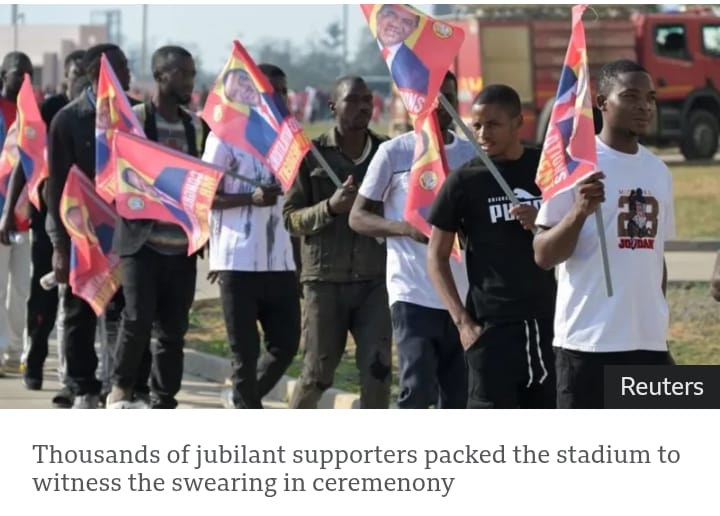
Addressing thousands of supporters at his inauguration on Tuesday, President Hichilema made no direct reference to Mundubile’s imprisonment but stressed the importance of maintaining national peace.
He said political ambitions should not undermine Zambia’s security and stability, while urging political rivals to tolerate differences and respect one another.
The president further called on the opposition to contribute ideas and cooperate with his administration in the national interest.
The inauguration at the National Heroes Stadium in Lusaka attracted large crowds and was attended by several African heads of state, including the presidents of Kenya, Botswana, Zimbabwe, Namibia and Tanzania.
Hichilema first assumed power in 2021 after defeating then-President Edgar Lungu by a wide margin.
At the time, Zambia was grappling with a sovereign debt default and inflation exceeding 24%.
The former businessman inherited what he described as a severely weakened economy.
His administration subsequently secured an agreement to restructure the country’s debt and worked to restore confidence among international lenders.
Inflation has since eased, although elevated living costs continue to place pressure on households.
Hichilema has pledged to use his second term to move Zambia beyond economic recovery and towards sustained expansion.
”We are moving from stabilisation to growth,” he said during his inauguration address.
He promised that the coming five years would focus on expanding prosperity and improving conditions for citizens, describing himself as a president committed to serving all Zambians.
Hichilema took the presidential oath alongside his vice-president, Mutale Nalumango.
By: Magdalene Agyeiwaa Sarpong