
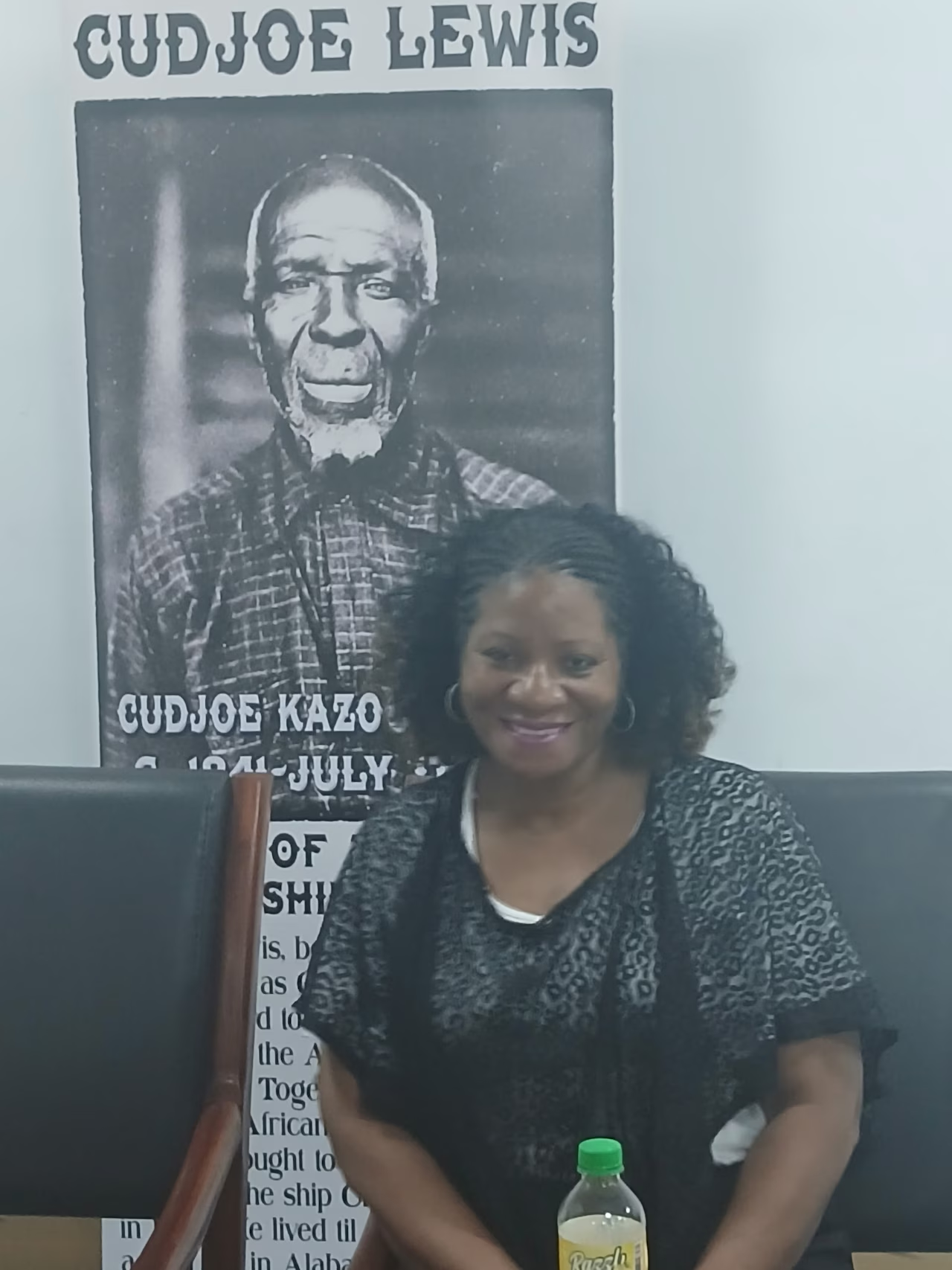
Cassandra Lewis poses for pictures ahead of receiving her official citizenship from the West African country of Benin. Behind her is a large image of her great-great-grandfather, Cudjo Lewis.image supplied by Cassandra Lewis
Cassandra Lewis’s path to citizenship in the African country of Benin began decades ago.
As the youngest of nine children, she grew up listening to her father recount stories that were not fantasy tales of slave ships and kingdoms, but real and harrowing memories passed down through generations. Her father, Johnny Lewis, had received them directly from his great‑grandfather, the famed Clotilda survivor and storyteller Kossola “Cudjo” Lewis, who instructed young Johnny to carry the stories forward.
“Johnny was with him there during the first 15 years of his life and he was able to tell his children,” said Lewis, 61, a fashion designer from Decatur, Ga. “He did exactly what Cudjo said.”
In May, the Lewis family’s lineage came full circle. Cassandra Lewis became the first descendant of the 110 enslaved Africans aboard the Clotilda to receive citizenship from the nation of Benin.
Her milestone arrives as the United States marks its 250th anniversary, a moment when questions of belonging and birthright citizenship are increasingly at the forefront. Lewis hopes her journey, and the embrace she received from Benin’s government and people, will inspire others seeking connection, healing, and a sense of home.
“This citizenship means a lot to me,” she said. “I knew about Cudjo from birth, but I never knew about Africa. I could [remember] seeing my daddy looking at books on African. Now I get to go there and learn about African, trace my roots back and learn about it.”
The citizenship ceremony took place on May 22, with Cassandra standing beside a large cutout of her great‑great‑grandfather. Cudjo Lewis is the most widely known of the Africans forcibly brought to Alabama aboard the Clotilda, and his story is familiar even among officials in Benin.
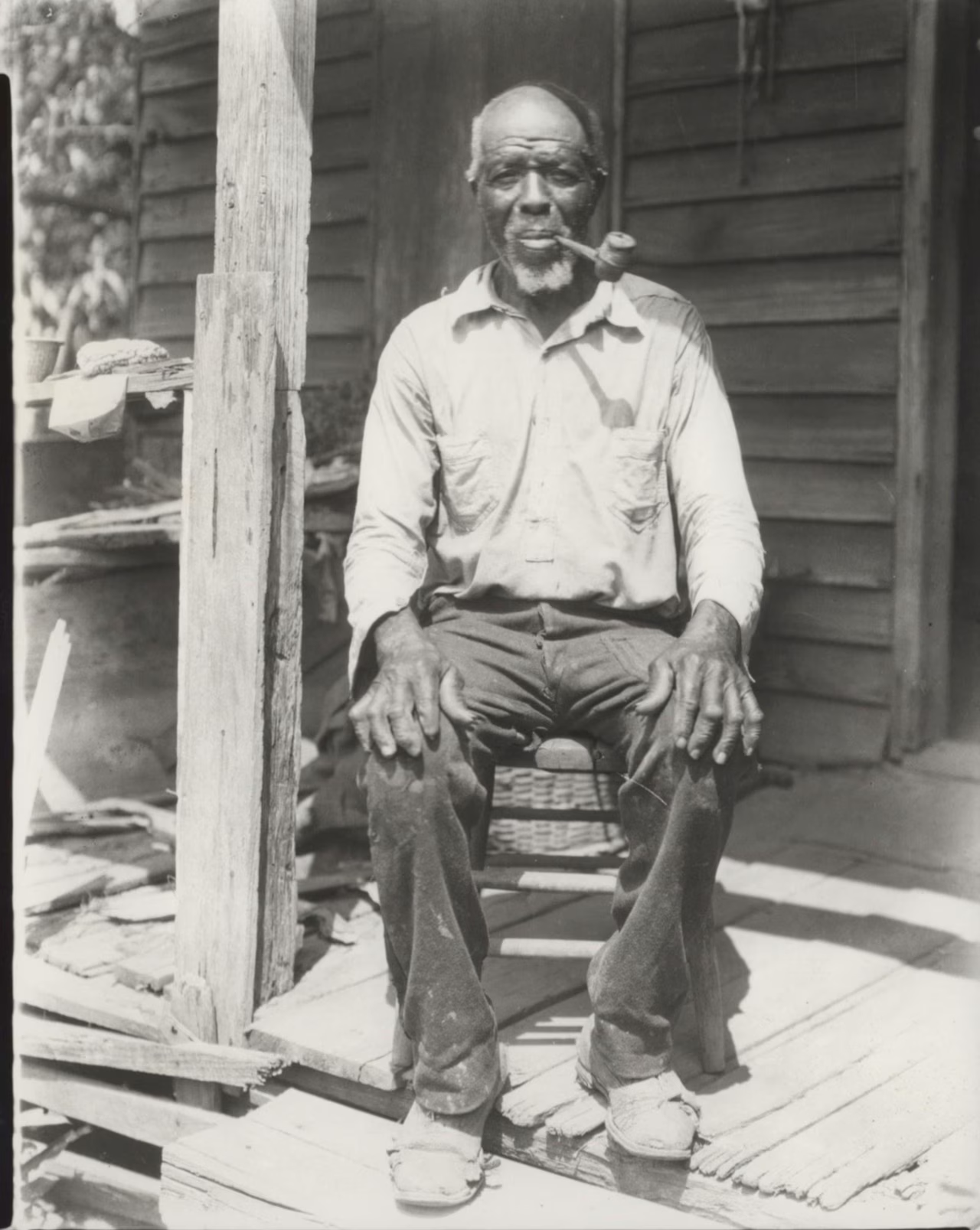 This is Cudjo Lewis, known in his native land as Kazoola. He was the last survivor of the Clotilda incident. He lived in Africatown until 1935, when he died at age 94. (Courtesy of the Mobile Library)
“The Minister of Foreign Affairs shook my hand and said, ‘glad you made it,’” she recalled. “He said that he wondered if it was me that was with my grandaddy. They were so happy that I was there.”
During the ceremony, her team asked whether the cutout of Cudjo could be placed behind her.
“They said they wanted it up front, so they put it up next to me on the stage,” she said, adding that she felt nervous before the proceedings began. “When they did that, it was like something had eased off me. I had my great‑great‑grandfather with me.”
Historical accounts suggest that Cudjo Lewis longed to return to his home in the Bante region of Benin. He was 19 when he was captured by warriors led by King Glele of the Dahomey kingdom and sold into slavery. Timothy Meaher, the wealthy steamship owner of the Clotilda, purchased the captives and illegally transported them to Mobile County, more than 50 years after the transatlantic slave trade had been outlawed.
The ship was then subsequently burned and sunk into the murky waters of Mobile Bay. It wasn’t until 2019 that a hull from the ship was recovered and confirmed as being that of the Clotilda. The discovery has sparked widespread interest in the slave ship’s story, its survivors — particularly Cudjo Lewis. Cassandra Lewis, herself, was featured in a powerful National Geographic documentary in 2024 that chronicles the descendants as they travel back to Benin, tracing their roots.
After emancipation, Cudjo and roughly 32 Clotilda survivors settled six miles north of downtown Mobile in a community they built called Africatown. There, they preserved West African languages, religions, and cultural traditions. Today, Africatown continues to honor that heritage, especially during the annual Landing Event & Ancestors Festival held July 9–12.
Cassandra Lewis, who grew up in Mobile but now lives in the Atlanta area, will attend this year’s festival with a new story to share. Her citizenship was made possible by a landmark Beninese law passed in September 2024, which for the first time enshrined the right of return and citizenship for descendants of Africans deported during the transatlantic slave trade.
Lewis began her journey last year, presenting DNA results and family documentation to Benin’s government to confirm her descent from Cudjo Lewis.
“The people there are trying to make things right,” she said. “These people have opened their doors and made it possible for me to come and learn about their people. They are very beautiful and welcoming in everything.”
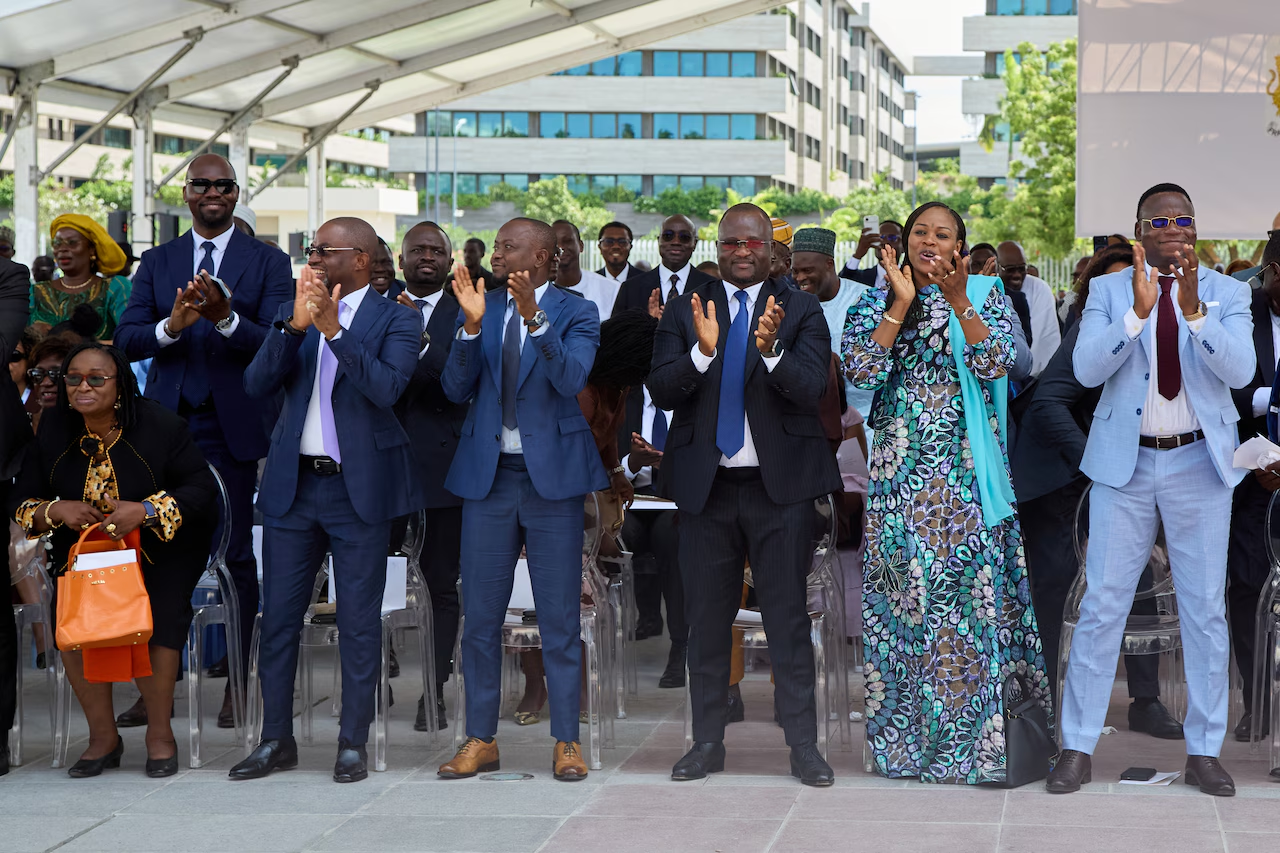 Guests cheer during the inauguration of Benin’s president-elect, Romuald Wadagni at the Palais des Congres in Cotonou, Benin, Sunday, May 24, 2026. (AP Photo/Abadjaye Justin Sodogandji)AP Photo/Abadjaye Justin Sodoga
Lewis also arrived during a historic moment. Two days after receiving her citizenship, she watched Benin’s former Finance Minister, Romuald Wadagni, be inaugurated as the country’s president.
“They sent a car for us to see the president get put into office,” she said, describing the vibrant attire worn by attendees and comparing the scene to a 1980s film starring Eddie Murphy. “To me, it was like ‘Coming to America.’”
The moment stirred deeper emotions. “They’ve installed many Black presidents but to me, it was so different. I never have seen this before. It was like (watching the inauguration of President Barack) Obama. It was beautiful.”
SOURCE: al.com