

Anti-immigrant marchers walk through the streets of Johannesburg on the day of an unofficial deadline set by anti-immigrant groups for all undocumented migrants to leave, in Johannesburg, South Africa, June 30, 2026. Image @ REUTERS/Oupa Nkosi
Police vehicles rolled through Johannesburg and Durban on Tuesday as South Africa’s long-feared “June 30 deadline” for undocumented migrants to leave the country took effect. While most marches remained peaceful under heavy security, scattered violence broke out in several areas.
The June 30 ultimatum, announced months ago by the anti-immigration movement March and March and backed by about 20 allied groups, has no legal force and has been rejected by the government. Even so, it prompted thousands of foreign nationals to leave the country in the weeks leading up to the deadline, with many saying they weren’t willing to take the risk of staying. UN figures cited by France 24 show deportations rose 46 percent over the past two financial years, increasing from just under 58,000 in 2024-25 to 109,344 by the end of March 2026. More than 8,000 people were also processed for repatriation at the Beitbridge border post in less than two weeks after recent unrest.
On Tuesday, protesters wrapped in South African flags and carrying wooden sticks marched through central Johannesburg and Durban as police monitored the demonstrations with armoured vehicles and helicopters. Officers confirmed arrests for looting but did not say how many people had been detained. In Thembisa, north of Johannesburg, demonstrators threw stones at police and people believed to be migrants while gunfire echoed near the city centre. The Daily Maverick reported that police fired shots in Benoni after about 500 protesters confronted officers. In Soweto, looters reportedly targeted shacks belonging to foreign nationals, according to the SABC.
“People are not working. The jobs are being taken by illegal foreigners. It’s not fair,” said Silindile Xaba, 31, who joined a group of women chanting anti-migrant slogans in Durban.
Meluneki Dlamini, also 31 and unemployed, shared a similar view.
“There are streets in town where the shops are all run by foreigners. In my hometown, Ulundi, Ethiopians own a lot of shops. That hurts the people who were there before,” he said.
The violence marks the latest chapter in a campaign that began with small gatherings in April before spreading across the country. AFP reports that at least two Mozambicans, one Ethiopian and one Malawian have been killed in anti-immigrant attacks in recent weeks. France 24 and other media outlets also reported that gunmen opened fire on an informal settlement in Cleveland, Johannesburg, on June 10.
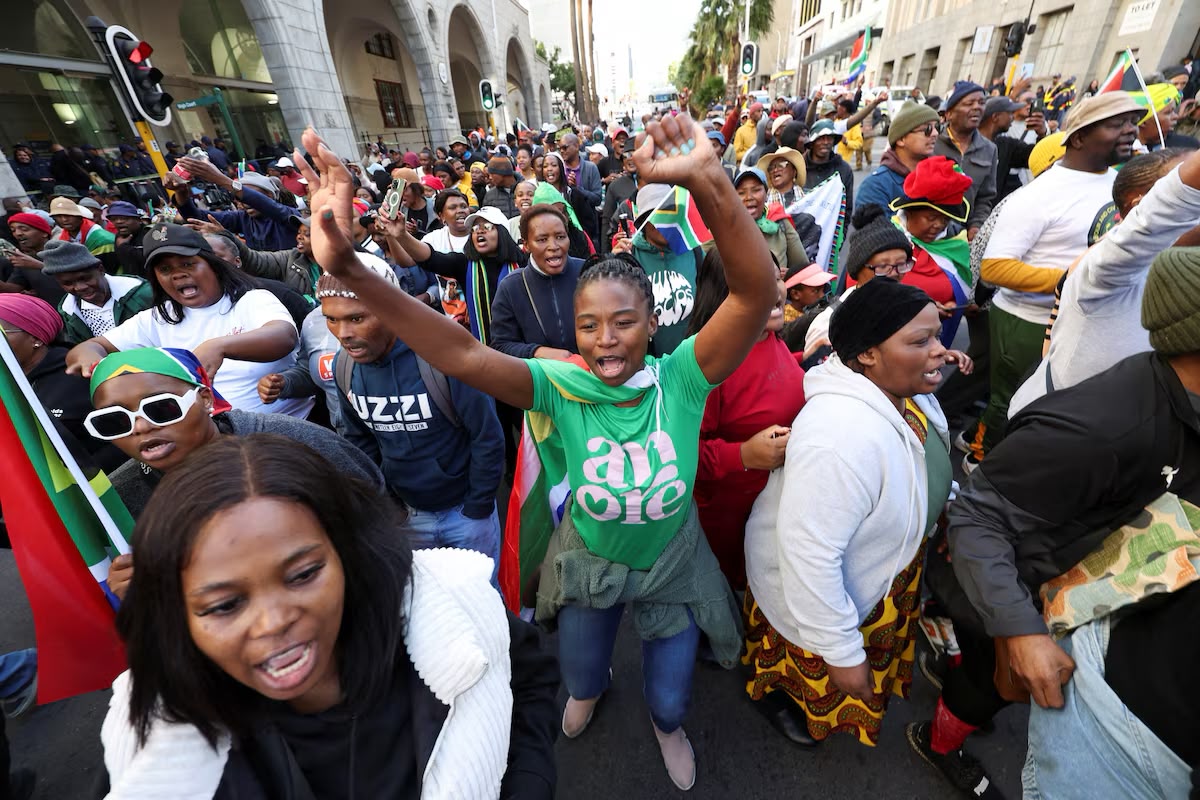 Anti-immigrant protesters march on the day of an unofficial deadline set by anti-immigrant groups for all undocumented migrants to leave, in Cape Town, South Africa, June 30, 2026. Image@ REUTERS/Esa Alexander
South Africa has experienced far worse violence before. The country’s deadliest wave of xenophobic attacks, in May 2008, left 62 people dead and displaced thousands. Twenty-one of those killed were South Africans who had been wrongly identified as foreigners.
March and March, founded in 2024 by former Vuma FM presenter Jacinta Ngobese-Zuma, says its campaign is aimed at government failures rather than migrants themselves.
“We are trying to channel that anger towards the government,” Ngobese told Reuters two weeks ago. “Unfortunately, we can’t be in every single community telling them how to behave. They live with these people.”
Human Rights Watch and the African Commission on Human and Peoples’ Rights argue that the group’s demonstrations have repeatedly been followed by violence, including fatal attacks, regardless of its stated intentions.
Fear has also spread through migrant communities because of evictions. Witnesses in Durban and Johannesburg said some landlords forced foreign tenants out of their homes despite them having valid immigration documents, hoping to avoid having their properties targeted.
“All these people were chased out by their landlords,” said Mabako Majole, a leader of the Congolese community, standing beside about 100 people sleeping on the streets of central Durban. “All these people are legal. They have documents.”
Authorities have sought to distinguish between lawful protest and vigilantism. Deputy National Commissioner for Policing Tebello Mosikili said police had opened 103 criminal cases against anti-foreigner vigilantes since March. Acting Police Minister Firoz Cachalia said officers had been placed on high alert nationwide, with police leave cancelled and additional personnel deployed ahead of the protests. The government has committed about 600 million rand ($36.6 million) to the security operation, with the military on standby.
President Cyril Ramaphosa has acknowledged public concerns over illegal immigration while condemning violence.
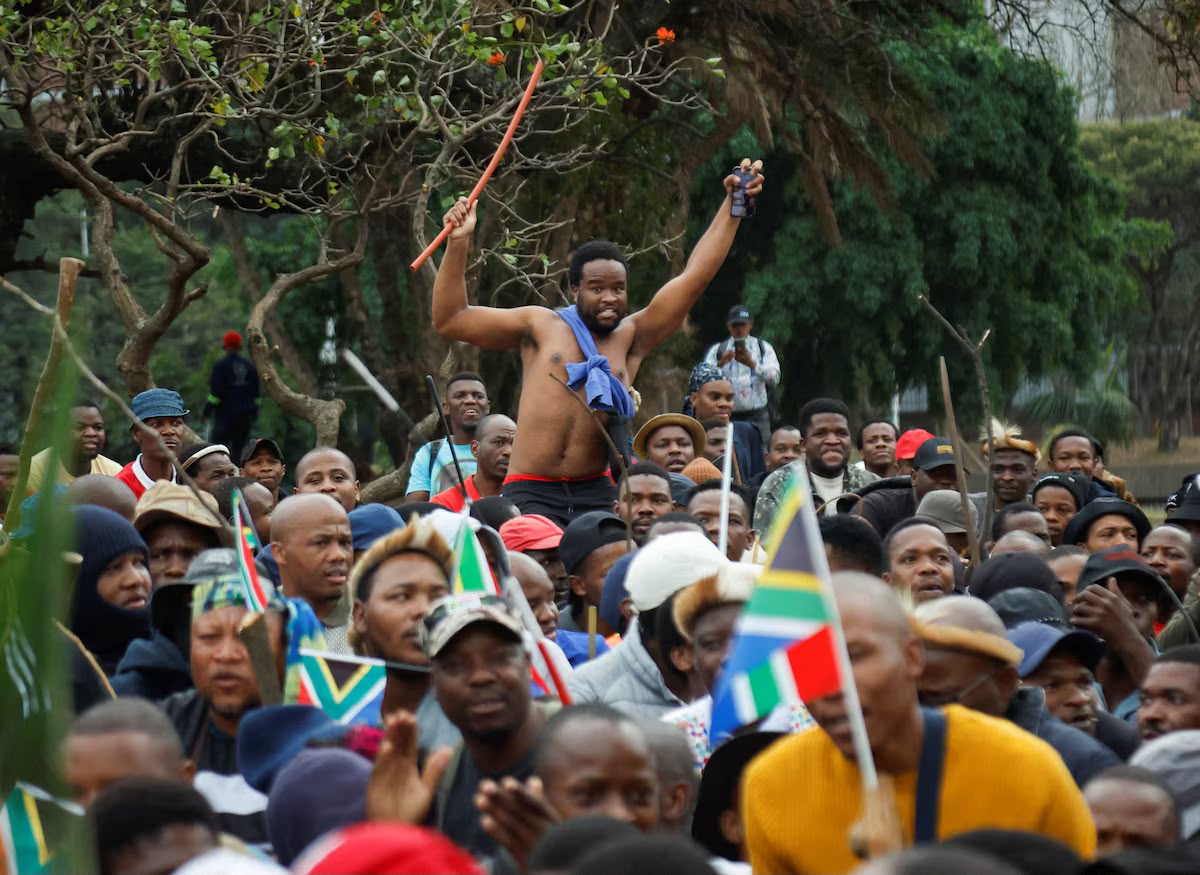 Anti-immigrant protesters march on the day of an unofficial deadline set by anti-immigrant groups for all undocumented migrants to leave, in Durban, South Africa, June 30, 2026. Image@ REUTERS/Rogan Ward
“South Africans’ deep concerns about illegal immigration are real and they deserve to be heard,” he said on Monday. “But the right to protest does not allow people to threaten or intimidate others, or to engage in acts of vandalism or violence.”
Speaking before the deadline, Ramaphosa described vigilantism as “taking the law into one’s own hands.” His government has also argued that undocumented migration places pressure on public services and distorts the labour market by allowing employers to hire cheaper, less protected workers.
Those concerns come against the backdrop of a struggling economy. South Africa’s unemployment rate reached 32 percent in the first quarter of 2026 after about 350,000 jobs were lost, with young people bearing the brunt, according to the national statistics agency.
Even so, Africa’s largest economy continues to attract migrants willing to work in lower-paying sectors such as domestic work, security and agriculture. Researchers say many employers favour foreign workers because they often accept lower wages and have fewer labour protections. South Africa’s foreign-born population is estimated at around three million people, roughly 4 to 5 percent of the population. Social scientists say there is little evidence to support widespread claims that migrants are a primary driver of crime or unemployment. South African officials also point out that debates over immigration have become increasingly divisive in many Western democracies, often fuelled by political polarisation and misinformation.
By: Andrews Kwesi Yeboah