

Tanzania’s opposition figure, Tundu Lissu, has received a four-year prison sentence after being convicted of inciting public disorder, following a trial that has intensified criticism of the country’s democratic environment.
A three-member High Court panel in Dar es Salaam cleared the 58-year-old of treason, ruling that the prosecution had not established an essential requirement of the offence. However, the judges found him guilty of encouraging supporters to interfere with the controversial 2025 presidential election.
Lissu, who chairs the opposition Chadema party, has consistently rejected the accusations, insisting that the proceedings were politically driven.
The judges cited his campaign message, “No Reforms, No Election”, as sufficient grounds for the incitement conviction, arguing that it was intended to encourage citizens to obstruct the electoral process.
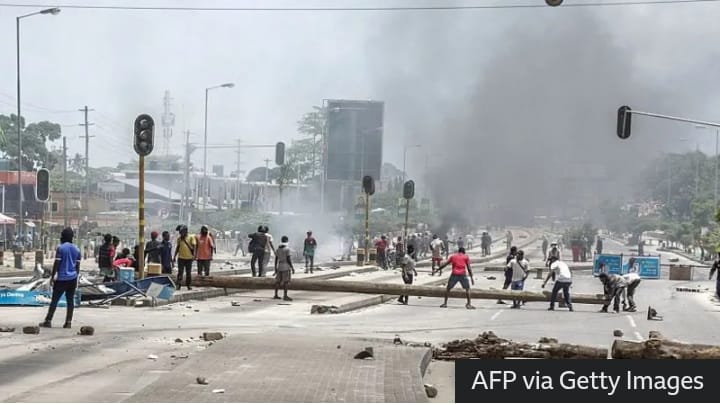 Widespread protests and a violent security crackdown after last year’s elections left at least 500 people dead, authorities say
In response, Lissu challenged the ruling, claiming that incitement had not been part of the original charge against him. He accused the judges of introducing an offence under political influence and indicated his intention to seek bail.
He also retains the right to challenge the verdict before the Court of Appeal, Tanzania’s highest judicial authority.
The politician has been held in custody since April 2025, after being arrested during his campaign for changes to the country’s electoral framework. Treason, the original accusation, is punishable by death under Tanzanian law.
President Samia Suluhu Hassan secured approximately 98 per cent of the votes in the October 2025 presidential election. However, the opposition rejected the outcome, describing it as undemocratic, particularly after its leading contenders, including Lissu, were prevented from participating.
Chadema had called for several electoral changes, including independent appointments to the electoral commission, protection of political parties from police intimidation, impartial election administration and unrestricted access for party representatives during vote counting.
The party also demanded that presidential election outcomes should be subject to judicial challenges.
Throughout his detention at Ukonga Prison in Dar es Salaam, Lissu reportedly embarked on two short hunger strikes over alleged restrictions on visits from his family and legal representatives.
He further accused prison officials of monitoring confidential discussions with his lawyers, claims which the authorities rejected.
His prosecution has attracted criticism from international human rights organisations, which have raised questions about the treatment of political opponents and restrictions on freedom of expression.
The 2025 polls were followed by widespread demonstrations and a deadly crackdown by security forces. An official investigation estimated that at least 500 people lost their lives, although opposition organisations maintain that the actual figure was considerably higher.
President Hassan has defended the government’s response, rejected allegations of political persecution and blamed foreign interests for allegedly organising attempts to destabilise her administration.
She has subsequently established another investigative commission to identify those responsible for the violence.
 President Samia Suluhu Hassan won 98% of the vote in last year’s election
Lissu has been a prominent opponent of the ruling Chama Cha Mapinduzi (CCM), a political movement that has maintained control of Tanzania since independence.
He entered Parliament in 2010 as the representative of a constituency in Singida Region. In September 2017, he narrowly escaped death when unidentified gunmen opened fire on his vehicle outside his residence in Dodoma, leaving him with multiple gunshot wounds.
Following extensive medical treatment overseas, he spent several years outside the country. He returned in 2020 to challenge the late President John Magufuli in the presidential election, whose outcome he disputed over alleged electoral malpractice.
Lissu later went into exile again before returning in 2023, after President Hassan lifted restrictions on opposition political gatherings.
His comeback initially raised hopes of improved political freedoms following years of repression under Magufuli, who died in office in 2021.
However, tensions between the administration and opposition parties intensified ahead of the 2025 elections, particularly after Lissu assumed Chadema’s national chairmanship in January that year and stepped up calls for comprehensive electoral changes.
His latest conviction is expected to further fuel international concerns over Tanzania’s political climate.
Last week, Amnesty International accused the authorities of sustaining their post-election crackdown, alleging that counterterrorism legislation was being used to intimidate critics and suppress dissent.
By: Magdalene Agyeiwaa Sarpong