

Zimbabwean author Simbarashe Kundizeza has dismissed claims that artificial intelligence (AI) was used to produce his short story, The Blue Fighter, which earned him this year’s Caine Prize for African Writing.
The controversy erupted after American magazine The Atlantic published an article alleging that Pangram, an AI-detection tool, had classified the award-winning work as entirely machine-generated.
The prize carries a £10,000 reward, equivalent to approximately $13,000.
Kundizeza, responding to the accusations on X, maintained that he personally authored the story, which explores a family’s struggle during difficult economic circumstances.
The allegations have sparked widespread debate among literary professionals, with several African writers questioning the reliability of automated detection systems and raising concerns about potential racial bias.
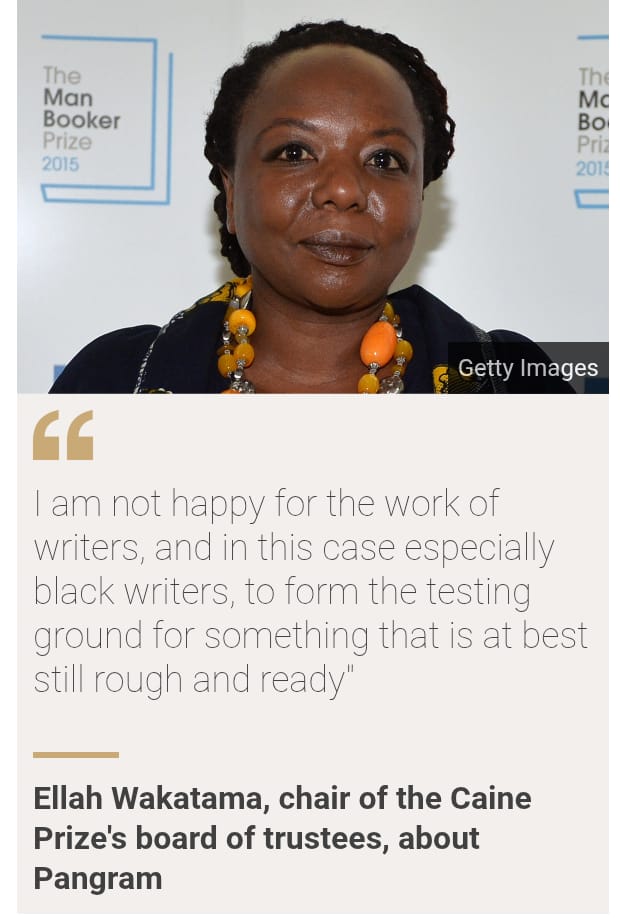
Ellah Wakatama, chair of the Caine Prize, expressed disappointment with The Atlantic for publishing the claims before conducting a comprehensive investigation.
Speaking to the BBC’s Front Row programme, she argued that the publication should have combined technological assessments with independent human verification.
Wakatama explained that she received information about the allegations on Friday, while the article by Vauhini Vara, titled Yet Another Prizewinner Seems to Be AI, appeared on Sunday.
She confirmed that the award organisers had launched an internal review, during which Kundizeza would provide records documenting the development of his manuscript.
Discussions were also continuing with the judging panel and The Shallow Tales Review, which originally published the story in 2025.The dispute comes amid similar controversies surrounding literary competitions.
Trinidadian writer Jamir Nazir faced allegations of AI use after winning the Commonwealth Short Story Prize, while Canadian-Haitian novelist Thélyson Orélien withdrew from France’s prestigious Goncourt Prize following comparable accusations, which he has denied.
Meanwhile, Nigerian media executive Wale Lawal criticised The Atlantic’s report, describing it as racist and unethical.
Zimbabwean novelist Joe Ruzvidzo also expressed support for Kundizeza, calling for resistance against what he termed discriminatory scrutiny of writers.
Nigerian publisher Modupe Daramola questioned why Black and African authors appeared to face disproportionate suspicion, arguing that AI-generated assessments should not automatically be treated as conclusive evidence.
Wakatama acknowledged that the Caine Prize does not routinely screen submissions for AI involvement because eligible works must already have been published. However, authors are expected to confirm that their entries are original.
Although she did not oppose introducing AI-detection technology into the assessment process, she warned against allowing such systems to determine the outcome without further examination.
She also questioned whether the technology had undergone sufficient testing, particularly when evaluating the work of Black writers.
Research has demonstrated that AI detectors can incorrectly identify human-authored material as machine-generated. Vara herself acknowledged that even sophisticated products such as Pangram cannot guarantee completely accurate results.
Her article referenced research from the Free University of Brussels, which reported no errors by Pangram and two other detection systems when assessing English-language writing by non-native speakers. Nevertheless, the researchers recommended using these tools as preliminary indicators requiring additional investigation.
Defending her findings, Vara told the BBC that she had also relied on her own literary judgment. She said previous Caine Prize-winning stories she tested were classified as entirely human-written.
She further disclosed that an earlier story by Kundizeza, published in 2021, received the same classification. However, she argued that differences in tone and style between the two works raised questions about their authorship.
Kundizeza rejected this reasoning, explaining that writers can develop their abilities significantly over time and experiment with different literary forms without compromising the authenticity of their work.
Vara also highlighted recurring sentence patterns contrasting two ideas and the frequent use of metaphors in The Blue Fighter, claiming these features were common in AI-generated material.
Kundizeza previously told BBC Newsday that the story emerged from a combination of personal experiences and artistic inspiration. He recalled hearing South African poet Vangile Gantsho recite a poem in Ghana last year about her father’s passion for constructing fish tanks.
He subsequently blended that inspiration with fictionalised elements of his family history, particularly the economic difficulties Zimbabwe experienced around 2002.
He explained that, like the father portrayed in his story, his own father worked as an accountant before leaving his job to cultivate tomatoes.
Despite the controversy, Kundizeza expressed gratitude for the support he had received from fellow authors and readers, reaffirming his commitment to his craft.
He concluded his statement on X with a firm declaration that he would continue writing.
By: Magdalene Agyeiwaa Sarpong