

El Mansouri (left) was named by King Mohammed VI (right) as the country’s first female prime minister
Morocco’s appointment of Fatima Zahra El Mansouri as its first female prime minister has reignited debate over women’s leadership, religious traditions and equal rights in the North African kingdom.
The controversy intensified after Mustafa Ramid, a former justice minister, invoked an Islamic saying that nations placing women in charge of their affairs would not prosper.
In a lengthy Facebook post, he questioned the suitability of a woman occupying the country’s highest government position. Ramid maintained that Morocco had established a balance between equality and state leadership, noting that the monarchy’s supreme office remained reserved for men.
Although Morocco operates under a constitutional monarchy, King Mohammed VI retains extensive executive authority.
El Mansouri’s Authenticity and Modernity Party (PAM) emerged as the largest parliamentary force following September’s elections. It subsequently formed an alliance with three other political parties, securing 207 of the legislature’s 395 seats.
Her appointment marked a historic breakthrough but also revealed continuing resistance to female political leadership. Shortly afterwards, local broadcaster Chouf TV interviewed men about having a woman lead the government.
Several respondents appeared uncertain, while others accepted the development because the monarch had made the decision. One older man described the arrangement as unfamiliar and expressed doubts about whether it was appropriate.
Public criticism of Morocco’s royal institution carries legal consequences, as the country’s penal code criminalises certain insults directed at the king, his family and the monarchy.
Meanwhile, social media users responded with political humour, sharing a video of two women fighting and suggesting it represented possible disagreements between El Mansouri and her government colleagues.
Despite the criticism, numerous younger Moroccans, particularly women, welcomed the historic appointment.
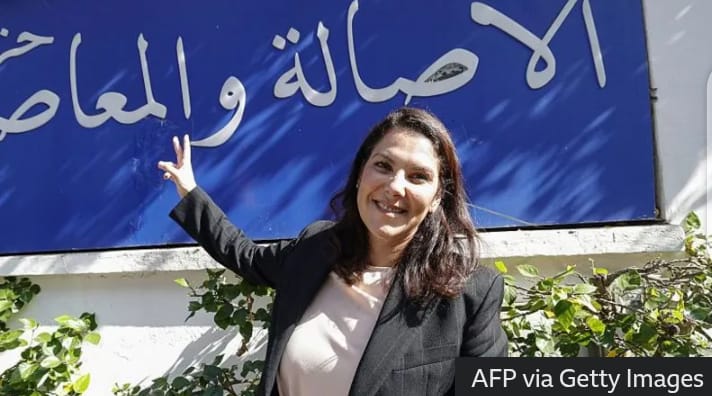 El Mansouri, 50, presented her appointment as a milestone for Moroccan women
However, traditional religious beliefs continue to influence national discussions about gender equality, especially regarding marriage, divorce and inheritance.
Under current inheritance provisions, daughters generally receive half the portion allocated to sons in comparable circumstances.
The Higher Council of Ulemas, Morocco’s official body of Islamic scholars, has opposed proposals for equal inheritance, citing religious jurisprudence.
The council has also resisted attempts to abolish taasib, a provision that can direct female orphans without brothers to share inherited property with male relatives, including distant family members.
A 2022 assessment by Morocco’s National Human Rights Council linked unequal inheritance arrangements to women’s economic hardship.
Polygamy remains lawful under specified conditions. Proposed amendments to the country’s family legislation have included allowing women to insert clauses into marriage contracts preventing their husbands from marrying additional wives.
However, exceptions involving a first wife’s infertility or illness have attracted criticism from women’s rights organisations concerned about privacy and medical confidentiality.
These disagreements form part of the broader campaign to amend the Moudawana, Morocco’s family code, which regulates marriage, separation and child custody.
A series of proposed changes was announced in 2024, but the measures have not yet been enacted.
Education is another priority for young women seeking improvements under the new administration.
Figures released in 2025 by Morocco’s High Commission for Planning indicated that only 55 per cent of girls aged between 15 and 17 attended school in rural communities, compared with 100 per cent in urban areas.
Poverty, early marriage and school dropout rates remain significant obstacles for girls living outside major cities.
Young Moroccan woman Chifae Laazouzi attributed the problem partly to long distances between homes and schools, inadequate transportation and families’ financial difficulties.
She also highlighted the cost of menstrual hygiene products, which prevents some girls from attending classes.
Laazouzi called for menstrual supplies to be provided freely in schools, arguing that menstruation remained a sensitive subject that society was reluctant to discuss openly.
El Mansouri brings considerable political experience to the premiership. During more than 20 years in public service, she served as mayor of Marrakech, held ministerial responsibilities and became a member of parliament.
She also spent five years overseeing national territory planning, urban development, housing and city policy under former Prime Minister Aziz Akhannouch.
Following her appointment, El Mansouri described the achievement as a source of pride for herself and women throughout Morocco.
Nevertheless, she has yet to indicate whether her government intends to advance the proposed family code amendments.
Her political career has also featured few prominent public declarations on women’s rights, despite sustained national discussions about inheritance, polygamy and related legislation.
Dr Irene Fernandez-Molina, a Global South specialist at the University of Exeter in the United Kingdom, interpreted the appointment against the background of Morocco’s political circumstances.
She noted that the September election attracted attention for both the appointment of the country’s first female prime minister and historically low voter participation.
Official figures recorded turnout at approximately 38 per cent of registered voters, with participation among the entire eligible population considerably lower.
Fernandez-Molina characterised the appointment as an example of state-led feminism under authoritarian rule, suggesting that governments could selectively promote women’s advancement to strengthen their legitimacy without fundamentally transforming political institutions.
She argued that elevating a woman to the head of government could help the monarchy project an image of progress and modernisation while deeper structural and social changes remained limited.
Women’s rights campaigner Yasmina Benslimane welcomed the breaking of a longstanding political barrier but emphasised the importance of examining El Mansouri’s background.
The prime minister’s late father was a pasha, a senior local administrator, and a diplomat. According to Benslimane, her family connections and access to influential political networks gave her advantages unavailable to many ordinary Moroccan women.
For Benslimane and other campaigners, the government’s handling of Moudawana reform will provide an important measure of its commitment to gender equality.
However, El Mansouri’s ability to introduce changes is constrained by Morocco’s political structure.
The king maintains substantial authority over defence, foreign relations and other strategic matters, limiting the government leader’s independent influence.
Reforming family legislation could also require navigating opposition from religious authorities, whose membership is predominantly male.
Consequently, some Moroccan women argue that the significance of El Mansouri’s appointment should ultimately be determined by her policies rather than her gender.
Young Moroccan woman Sara Zouiten cautioned against automatically associating female leadership with a commitment to women’s rights.
She said El Mansouri’s political party had presented itself as a force for modernisation and expressed hope that its promises would result in tangible improvements for women across the country.
By: Magdalene Agyeiwaa Sarpong