

Paul Mackenzie operated his church for 16 years, attracting thousands of followers
A Kenyan court has begun delivering its judgment in the case of controversial preacher Paul Mackenzie and 29 associates accused of murdering 191 people, including 190 children, in a religious cult linked to mass deaths in Shakahola Forest.
Prosecutors allege that the accused encouraged followers, particularly children, to starve themselves to death in the belief that they would meet Jesus.
The group reportedly followed extreme religious teachings that rejected formal education, modern healthcare and other aspects of contemporary life.
Mackenzie and his co-accused have denied the murder charges, maintaining that nobody was compelled to die. His former security chief, Enos Amanya Ngala, who was initially charged in the case, later reached a plea agreement and became a prosecution witness.
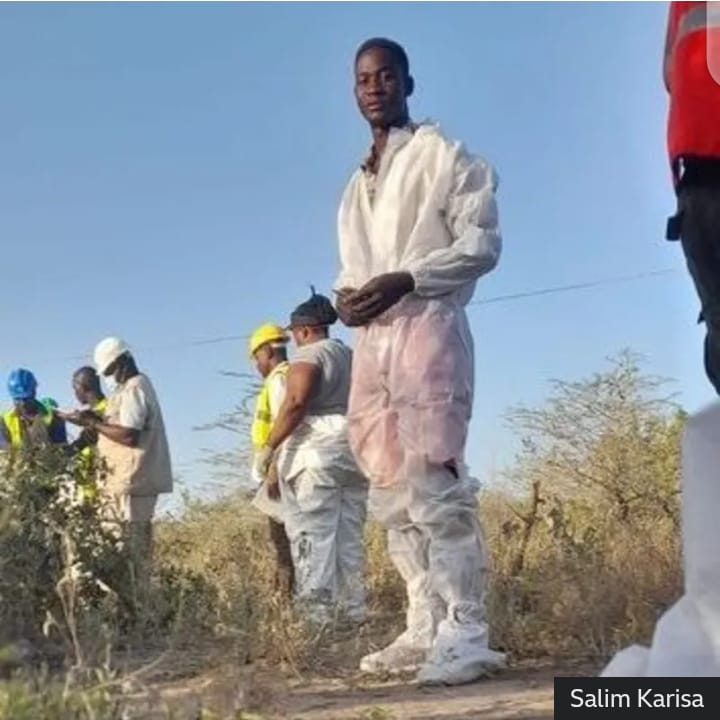 Salim Karisa was paid about $8 a day to dig up dozens of bodies
The preacher is also facing separate legal proceedings involving terrorism, radicalisation and the denial of education to children. However, the current trial marks the first time a court is delivering a verdict on the murder allegations.
Investigators have recovered more than 400 bodies from shallow graves in Shakahola Forest, near Kenya’s coastal region, where Mackenzie established a settlement for his followers.
Seventeen local men were recruited to excavate the graves, with some reportedly receiving as little as $8 daily. The workers described disturbing discoveries, including the remains of infants and children buried together, sometimes with their limbs bound and bodies covered in bedsheets.
One gravedigger, identified as James, told the BBC that every grave they uncovered contained at least three bodies. He recalled finding 12 children buried in a single trench, stacked on top of one another.
Another worker, Salim Karisa, said residents occasionally transported people into the forest on motorcycles without understanding what was happening within the secluded settlement.
Some victims came from neighbouring communities, while others had travelled from different parts of Kenya to join Mackenzie’s movement.
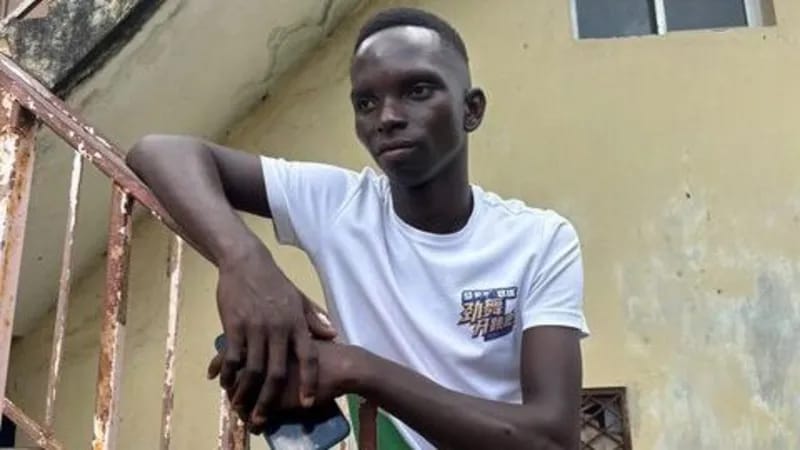 Peter Shukrani says he would have died if he had stayed in the forest but still believes Mackenzie is a good man
Stephen Mwiti, a 48-year-old father, said he lost all six of his children after his family became involved with the preacher’s teachings. He recalled confronting Mackenzie at his residence and seeing numerous children and women, many with shaved heads.
Mwiti’s former wife is among those charged alongside the preacher. He expressed deep anger over the deaths, telling the BBC that he had recovered and buried only his son Samuel’s remains.
He also blamed a television set in his home for introducing his family to Mackenzie’s religious messages, which eventually influenced their lives.
Mackenzie founded Good News International Ministries in 2003, attracting thousands of followers through church branches across Kenya. His organisation operated Times TV, a station that broadcast sermons from his church in Malindi.
His messages reportedly portrayed schooling as evil, healthcare as contrary to religious principles and digital identification cards as symbols associated with the devil.
His son, Dan Paul Mackenzie, who worked as a cameraman for the church, recalled how congregants gathered for worship before his father delivered sermons that sometimes involved casting out demons.
The main church closed in 2019, after which Mackenzie relocated to Shakahola Forest and urged his followers to join him.
Among those who moved was Peter Shukrani, who was eight years old when he began attending the church. He described Mackenzie as a spiritual father and said his loyalty to the preacher remained unchanged despite his experiences.
Shukrani said he became seriously ill while living in the forest because his mother discarded the medication prescribed for him, believing that divine intervention alone could restore his health.
He was eventually rescued in March 2023 after spending weeks bedridden. He believes he would have died without the intervention that removed him from the settlement.
The first remains were discovered by local herders in March 2023, by which time hundreds of people were believed to have died. Witnesses described victims becoming so weak from starvation that some died while being carried out of the forest.
Court documents outline the allegations against Mackenzie and his co-accused, identifying 190 of the 191 alleged victims as children.
Several bodies remain unidentified because of decomposition, with records referring to some victims by their estimated age, gender, burial location and date of discovery.
Investigators have linked the deaths to starvation, strangulation and physical violence, although the accused have denied responsibility for murder.
Despite his ordeal, Shukrani continues to defend Mackenzie, insisting that followers chose to fast because of their beliefs rather than through force. He said he still loved the preacher and considered him his pastor.
Dan Paul Mackenzie, however, believes his father should be convicted, arguing that his position as the movement’s leader made him responsible for the deaths of those who trusted him.
By: Magdalene Agyeiwaa Sarpong