

Kenya has reported its first confirmed Ebola infection after a citizen who had spent seven years in the Democratic Republic of Congo (DRC) died in Nairobi.
Health Cabinet Secretary Aden Duale said the man had been unwell for about a month and received treatment at several medical facilities in the DRC before travelling to Kenya.
The patient entered Kenya after travelling by road through Uganda, where he later boarded a flight to Nairobi. He underwent routine screening at the airport before a relative took him to a hospital.
He was subsequently moved to a specialised isolation centre established during the Covid-19 pandemic after doctors suspected a viral haemorrhagic illness.
According to Mr Duale, the man developed fever, chills, severe weakness, difficulty swallowing, muscle aches and bleeding beneath the skin.
Laboratory tests later confirmed infection with the Bundibugyo strain of Ebola.
The patient died late on Monday, with authorities arranging a burial under strict health and safety procedures.
Kenyan officials have identified 28 people who had contact with him, including relatives and medical personnel.
Investigations are also underway to locate 23 passengers and four crew members who were aboard the same aircraft.
Mr Duale has appealed for calm while directing healthcare professionals to strengthen infection-control practices.
The outbreak in the DRC has recorded 8,463 infections and 4,082 deaths, according to the World Health Organization.
Medical charity Médecins Sans Frontières (MSF), however, says the actual number could be considerably higher because conflict has disrupted disease monitoring and testing.
MSF has warned that transmission is accelerating in North Kivu, where newly detected infections have increased sharply.
The province borders Ituri, the area where the outbreak was first identified.
The DRC has faced prolonged armed conflict in its eastern regions, with rebel organisations fighting over territory, political influence and valuable natural resources.
The violence has displaced millions and severely affected healthcare facilities and disease-control operations.
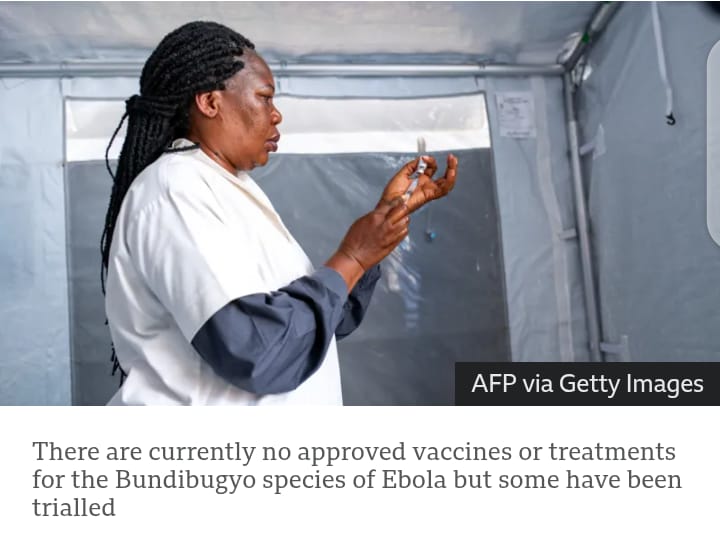
The Bundibugyo variant responsible for the outbreak is uncommon, and there is currently no licensed vaccine or treatment specifically approved for it.
Four vaccine candidates are under development, with one entering human trials in July.
By: Magdalene Agyeiwaa Sarpong