
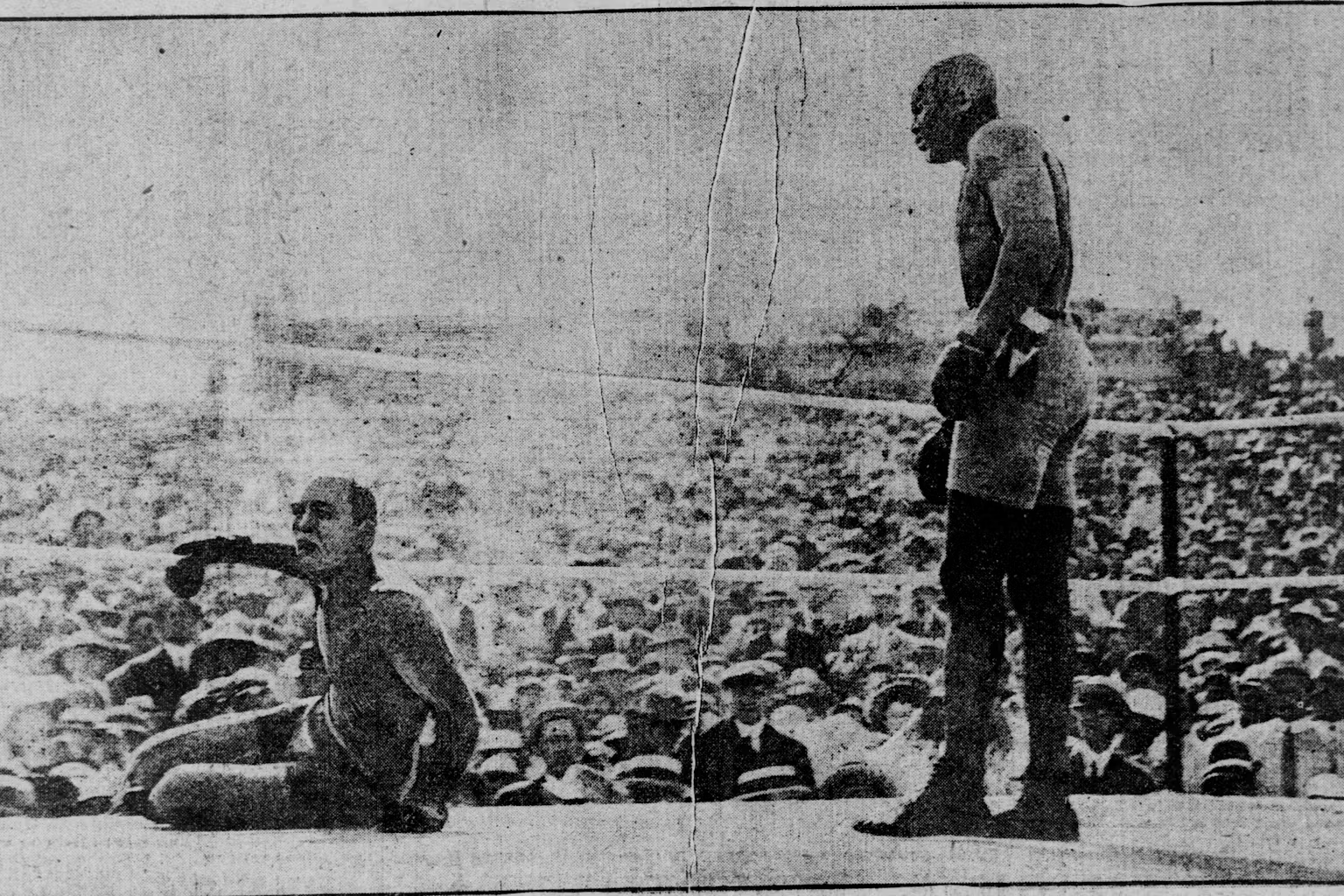
Black heavyweight champion Jack Johnson, right, beat James Jeffries in 1910, sparking racial violence. George Haley, San Francisco Call, via University of California, Riverside, via Library of Congress. Image @ theconversation.com
Jack Johnson’s victory over James J. Jeffries on July 4, 1910, remains one of the most important moments in sports history. While Johnson became the first Black heavyweight boxing champion to defeat the man known as the “Great White Hope,” his victory also triggered widespread racial violence across the United States.
The highly anticipated fight took place in Reno, Nevada, and was promoted as “the fight of the century.” More than a boxing contest, it was widely seen as a test of racial superiority during a time when America was deeply divided by race.
Johnson defeated Jeffries with ease, ending the hopes of many white Americans who believed Jeffries would restore what they considered white dominance in boxing.
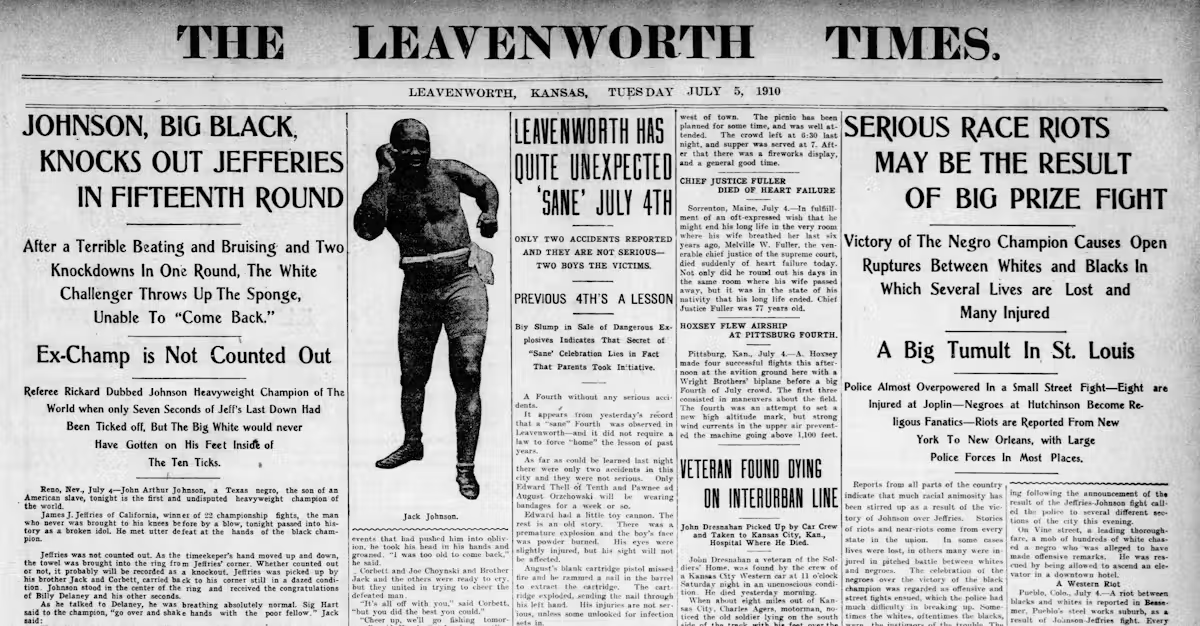
The Leavenworth Times in Kansas on July 5, 1910, published news of Johnson’s win and racial violence across the nation. Leavenworth Times via Harvey County Historical Museum
Jeffries had openly declared that he would “reclaim the heavyweight championship for the white race.” Newspapers across the country also presented the contest as a battle over racial superiority. The Chicago Defender, a Black newspaper, said the two fighters would “settle the mooted question of supremacy.”
Instead, Johnson’s commanding victory challenged long-held beliefs about white supremacy and quickly led to violent reactions across the country.
According to reports, white mobs attacked Black communities in more than 50 cities across 25 states. At least 20 people were killed, almost all of them Black, while hundreds more were injured or arrested.
One of the worst incidents happened in Manhattan, New York, where a white mob set fire to a building housing Black families and blocked the exits to prevent people from escaping. Violence was also reported in cities including Atlanta, Houston, St. Louis, Pittsburgh, New Orleans and in several small towns.
Near Uvalda, Georgia, white men opened fire on Black construction workers who were celebrating Johnson’s victory. As the workers tried to flee into nearby woods, they were hunted down, leaving three people dead and five injured.
In Houston, a Black man celebrating the result was attacked when a white man “slashed his throat from ear to ear.” In Wheeling, West Virginia, another Black man driving an expensive car was dragged from his vehicle by a mob and lynched.
Historian Geoffrey C. Ward described the scale of the unrest in his biography Unforgiveable Blackness, writing, “No event yielded such widespread racial violence until the assassination of Dr. Martin Luther King, Jr., fifty-eight years later.”
Johnson’s victory came during the Jim Crow era, a period marked by segregation, racial discrimination and widespread violence against Black Americans.
Johnson-Jeffries fight
Born in Galveston, Texas, in 1878, Johnson became known not only for his boxing skills but also for refusing to accept the racial expectations of his time. He drove expensive cars, wore stylish clothes and openly socialized with white women, actions that angered many white Americans.
His success in the ring challenged the myths of white superiority that were promoted by many politicians, newspapers and public figures.
Before the fight, The New York Times warned, “If the black man wins, thousands and thousands of his ignorant brothers will misinterpret his victory.”
After Johnson defeated Jeffries, the Los Angeles Times published an editorial telling Black Americans: “Do not point your nose too high. Do not swell your chest too much. Do not boast too loudly. Do not get puffed up. … Your place in the world is just what is was. You are on no higher place, deserve no new consideration, and will get none.” The newspaper later apologized for the editorial nearly a century later.
The backlash went beyond street violence. Many cities banned screenings of the fight film, fearing it would encourage further unrest. In 1912, the U.S. Congress passed the Sims Act, banning the transport of boxing films across state lines, effectively preventing many Americans from seeing Johnson defeat a white opponent.
Johnson himself later became a target of the legal system. In 1912, he was arrested under the Mann Act, which made it illegal to transport women across state lines “for the purpose of prostitution or debauchery, or for any other immoral purpose.” He eventually served 10 months in federal prison.
Historian Randy Roberts wrote that Johnson had become much more than a boxer, saying, “No longer the respectful darky asking, hat in hand, for massa’s permission, Johnson was seen as the prototype of the independent black who acted as he pleased and accepted no bar to his conduct. As such, Johnson was transformed into a racial symbol that threatened America’s social order.”
By: Eleanor Wright