

Botswana has come under renewed scrutiny after authorities approved the killing of 23 elephants to supply meat for celebrations marking the nation’s 60th anniversary of independence.
Animal welfare campaigners have condemned the move, warning that using elephants for a state-sanctioned feast could weaken efforts to protect the species.
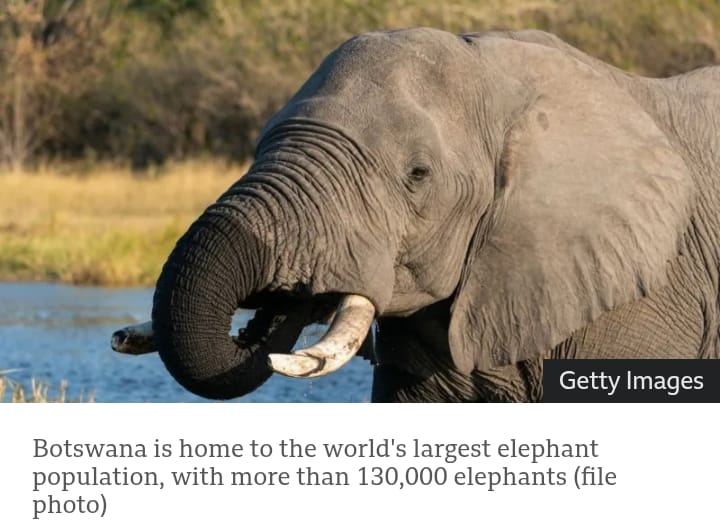
Botswana is home to the world’s largest elephant population.
A permit issued by the Ministry of Environment and Tourism allowed 23 elephants, alongside other wildlife, to be hunted for what authorities described as complimentary purposes.
Oaitse Nawa, chairman of the Botswana-based Elephant Protection Society, said elephants require stronger safeguards.
He cautioned that publicly sanctioned killings could give poachers the impression that hunting the animals is acceptable.
The decision has also generated concern among some residents because of an ongoing foot-and-mouth disease outbreak.
Authorities have introduced measures aimed at limiting transmission of the livestock disease.
Tshenatshe Monwela, a community elder in Maun, said buffalo would have been a more appropriate choice for the celebrations.
He argued that elephants hold significant cultural and environmental value and that Botswana’s long-standing wildlife protection efforts should have been considered.
The government’s independence programme includes a carnival in Gaborone, cultural displays, musical performances and sporting activities.
Game meat is being incorporated into traditional meals prepared for the anniversary festivities.
The animals were distributed across eight districts.
By Wednesday morning, it remained uncertain how many had already been killed, although local news outlets published photographs showing people surrounding elephant carcasses and collecting portions.
In Chobe, a northern wildlife area bordering Namibia, Zambia and Zimbabwe, MP Simasiku Mapulanga raised concerns about residents gathering meat directly from a carcass at a school.
He said the distribution process could disadvantage older citizens, expectant mothers and persons with disabilities while also creating overcrowding.
Mapulanga proposed processing the meat into five- or 10-kilogram packages to improve sanitation and make allocation more orderly.
The controversy has revived Botswana’s broader dispute over the management of its estimated 130,000-plus elephants.
Rural populations frequently report damaged crops, destroyed property and, in some cases, fatal encounters with the animals.
Government officials maintain that controlled hunting can help regulate wildlife numbers, reduce clashes between people and elephants, and provide financial benefits to communities.
Botswana prohibited trophy hunting in 2014 under former President Ian Khama before restoring the practice in 2019 during Mokgweetsi Masisi’s administration.
Hunting has remained permitted since Duma Boko became president after defeating Masisi in the 2024 election.
Officials say income generated through hunting contributes to conservation and development programmes.
Environment and Tourism Minister Wynter Mmolotsi told Parliament that designated elephant quotas generated 15.6 million pula ($1.1 million) in 2025 for projects in elephant-inhabited areas.
Conservation groups continue to question whether the scale of hunting can be maintained without harming elephant populations, while supporters say international criticism often fails to account for the economic, environmental and safety pressures experienced by communities living alongside the animals.
By: Magdalene Agyeiwaa Sarpong