

A nurse has been killed and another medical professional critically injured after suspected Ebola responders were attacked by residents in the north-eastern Democratic Republic of Congo (DR Congo).
According to UN-backed Radio Okapi, the assailants were local youths who accused the healthcare workers of polluting water supplies and transmitting the deadly virus. The World Health Organization (WHO) has strongly condemned the incident.
In response to the growing threat, neighbouring Uganda has introduced stricter border measures, prohibiting non-essential movement between the two countries.
Ugandan nationals returning from DR Congo will also be required to undergo a 21-day quarantine at their own expense.
The ongoing epidemic has reportedly claimed more than 4,800 lives and infected almost 10,000 people in DR Congo since it began in May.
WHO Director-General Tedros Adhanom Ghebreyesus emphasised that medical personnel must be allowed to perform their responsibilities without fear of violence. He stressed the importance of protecting frontline workers and ensuring their safety and dignity.
The international health organisation also expressed sympathy to the deceased nurse’s relatives and colleagues while wishing the injured staff member a speedy recovery.
Meanwhile, Kenya and Nigeria have recently confirmed their first infections associated with the current outbreak, raising concerns about the disease spreading across national borders.
In Nigeria, an infected woman was transferred from Abuja to Switzerland on Monday for specialised medical care.
She is the Ugandan-born spouse of a Swiss diplomat and had reportedly visited Uganda’s capital, Kampala, for a holiday. Her husband, who has not developed symptoms, accompanied her during the evacuation.
Africa Centres for Disease Control and Prevention Director-General Jean Kaseya disclosed details of the couple’s movement. Nigeria’s health ministry subsequently confirmed that the patient remained stable, conscious and capable of communicating.
Investigations are underway to determine how she acquired the infection.
The latest restrictions in Uganda follow concerns surrounding the Nigerian patient and a Kenyan businessman, both of whom tested positive after travelling through the country.
Uganda has maintained that it has not recorded any new infections since August. The Kenyan businessman had travelled from DR Congo, where he reportedly had commercial interests, before arriving in Nairobi.
Under the new arrangements, only essential personnel, including humanitarian workers, truck operators and security officers, will be permitted to cross into Uganda from DR Congo. All entrants must undergo rigorous health checks.
Additionally, every person arriving in Uganda, irrespective of their country of departure, must complete a traveller-location form to support contact tracing if required.
Health Minister Chris Baryomunsi told the BBC’s Newsday programme that the measures were intended to protect Uganda from the disease.
Authorities also disclosed that approximately 60 individuals monitored following exposure to the Kenyan businessman had completed their observation period and been discharged.
Although Uganda previously recorded 20 Ebola infections and two deaths after the outbreak began in DR Congo, the WHO declared the country free of the disease in August.
Both the Nigerian woman and the Kenyan businessman reportedly passed through Entebbe International Airport on the same day before their infections were confirmed.
Diana Atwine, Permanent Secretary at Uganda’s Ministry of Health, said airport surveillance footage revealed no direct physical contact between the two passengers.
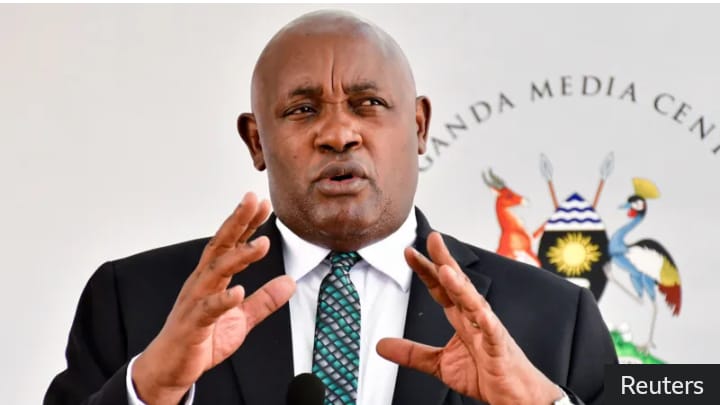 Health Minister Chris Baryomunsi said the measures were meant to keep the country free of Ebola
The Kenyan businessman died two days after reaching Nairobi. Kenyan authorities have subsequently identified eight additional infections, while another woman related to the businessman died over the weekend.
Ugandan officials initially indicated that the Nigerian patient had visited eastern DR Congo and merely transited through Uganda. However, on Sunday, the country’s health ministry announced that Nigerian and Ugandan authorities were jointly examining her movements, travel records and possible exposure locations.
Baryomunsi warned that the recent developments demonstrated that the threat remained significant, calling for continued vigilance.
He explained that Uganda’s shared frontier with DR Congo, alongside established commercial activities, travel routes and family connections, increased the possibility of cross-border transmission.
Ebola is transmitted through direct contact with infected bodily fluids, including blood and vomit.
The current epidemic involves the Bundibugyo strain, a relatively uncommon variant for which no approved vaccine or specific treatment is currently available.
Nevertheless, researchers are conducting trials to identify effective medical interventions.
By: Magdalene Agyeiwaa Sarpong