

Ghana is set to welcome two major African gatherings aimed at advancing cultural industries, industrialisation and vocational training in the country’s capital, Accra, between December 9 and 12, 2026.
The programmes, known as the African Festival of Arts, Culture and Creatives (AFESTACC) 2026 and Industrial Skills Week Africa (ISWA) 2026, are being coordinated by the Ministry of Tourism, Culture and Creative Arts in partnership with the African Union Development Agency (AUDA-NEPAD).
Both initiatives have been incorporated into the country’s official December in GH programme, making them part of the major attractions anticipated during the festive period.
Activities will take place from December 9 to 11, with representatives from governments, businesses, cultural organisations, investment institutions, development agencies, vocational schools and the African Diaspora expected to participate.
A community wellness exercise will mark the closing ceremony on December 12.
AFESTACC will provide an opportunity to showcase Africa’s artistic heritage while exploring ways to expand the economic potential of cultural and creative businesses.
Planned activities include fashion displays, food exhibitions, artistic performances, commercial showcases and investment forums.
Special sessions will also target young entrepreneurs, women-led businesses and professionals within the creative sector.
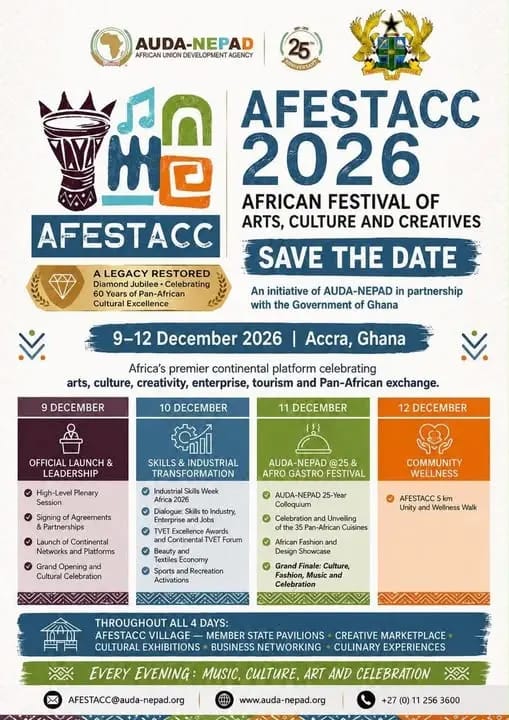
The festival is expected to support the African Union’s Agenda 2063, which seeks to promote continental unity through common traditions, cultural values and historical heritage.
Meanwhile, ISWA 2026 will concentrate on equipping Africa’s workforce with relevant technical expertise to accelerate manufacturing, productivity and job creation.
Operating under the theme, “Building Africa’s Industrial Future Through Demand-Driven Skills Development and Strategic Partnerships,” the conference will examine ways of aligning vocational education with the changing requirements of employers.
Discussions will cover digital technology, environmentally sustainable competencies, business development, engineering, technical education and collaboration between industries and training providers.
Organisers also anticipate unveiling the Africa TVET Regulators Association, alongside deliberations on strengthening partnerships between African and European institutions in professional training.
The simultaneous organisation of the two programmes is intended to demonstrate how cultural entrepreneurship and industrial advancement can complement each other through funding, specialised knowledge and strategic alliances.
In a joint communiqué, Ghana’s government and AUDA-NEPAD described the initiative as “a continental platform where culture meets enterprise, creativity meets industry, and skills meet opportunity”.
They further encouraged African Union member countries, regional organisations, commercial investors, corporate bodies, development institutions and diaspora communities to take part.
Ghana’s selection as host is expected to strengthen its standing as a centre for heritage promotion, international tourism, business opportunities and Pan-African cooperation.
By: Magdalene Agyeiwaa Sarpong