

Travellers are subject to temperature checks at Kenyan border crossing-points
Kenya has confirmed a second Ebola-related death as authorities intensify efforts to contain the country’s first recorded outbreak of the virus.
The latest victim, a 65-year-old woman related to the initial patient, died while in isolation after developing symptoms on October 13, according to the Ministry of Health.
Seven additional patients remain under medical care at two designated isolation centres. Officials say the infections are confined to a single cluster, with no indication that the virus has spread into the wider community.
The first fatality occurred on October 5, involving a man who became ill in September and received treatment at several hospitals in the Democratic Republic of Congo (DR Congo) before travelling to Nairobi, where he died days later.
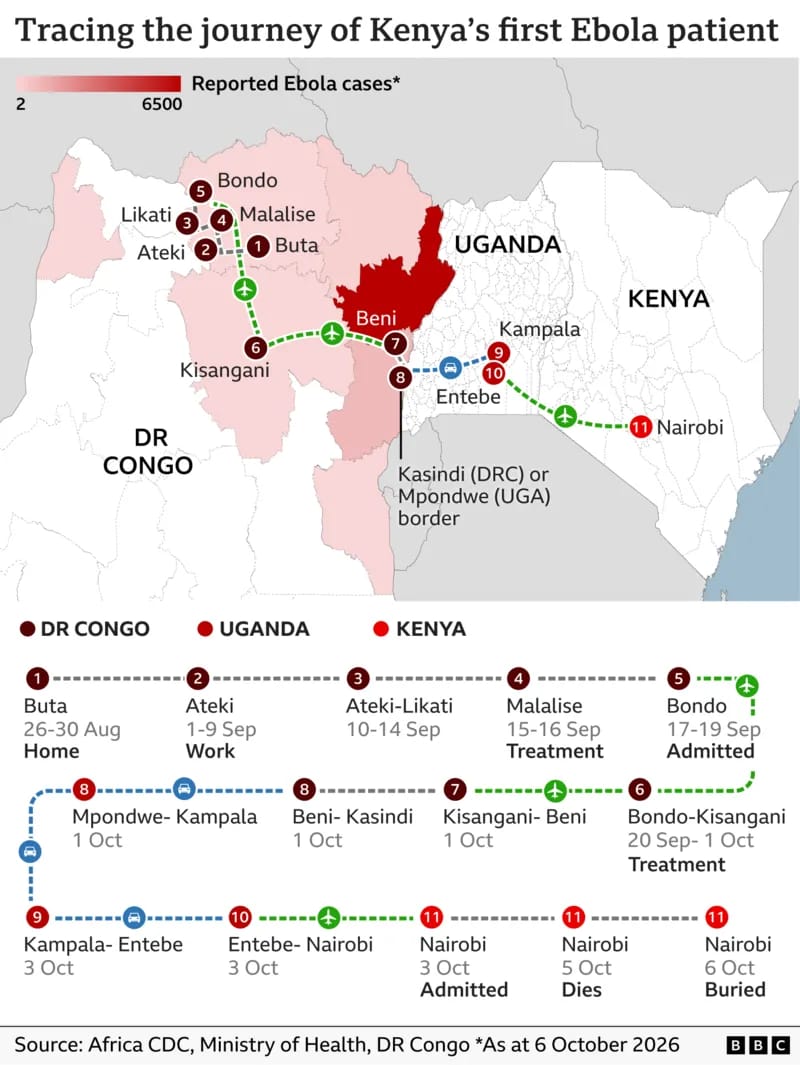
Those currently receiving treatment include three family members of the deceased man, three healthcare professionals and a hospital sanitation worker.
The outbreak has raised concerns across the region, with the United States advising its citizens against travelling to Kenya. Neighbouring Uganda, Ethiopia and Somalia have also heightened their vigilance.
Ebola is a severe viral illness that can cause vomiting, diarrhoea and organ failure. Some infected individuals experience internal or external bleeding. Transmission occurs through direct contact with contaminated bodily fluids, including blood and vomit.
The current outbreak involves the Bundibugyo strain, a relatively uncommon variant for which no approved vaccine or specific treatment is currently available, although clinical trials are ongoing.
The International Rescue Committee has warned that Kenya remains vulnerable to further imported infections because of its proximity to DR Congo, where more than 9,500 cases have been reported. The organisation is collaborating with both countries to support containment efforts.
In response, Kenyan authorities have introduced stricter health checks for passengers arriving from DR Congo and nine other countries classified as high-risk. These include Uganda, Tanzania, Rwanda, Burundi, Angola, Zambia, Ethiopia, South Sudan and the Central African Republic.
Passengers travelling from the listed nations must complete an electronic health surveillance declaration before boarding their flights. Upon arrival, they are required to present a QR code to port health officials for verification.
Additional screening measures have also been imposed on aircraft arriving from the affected countries as part of efforts to prevent further imported infections.
Domestically, the government has launched public awareness campaigns urging residents to report suspected infections immediately and seek medical attention without delay.
Meanwhile, Nigeria has confirmed one Ebola case, with its health minister, Professor Ali Pate, indicating that preliminary genetic findings suggest a connection between the Nigerian infection and a strain previously identified in Kenya.
Pate said investigators had found no evidence that the Kenyan patient travelled to Nigeria. However, further laboratory examinations are being conducted to establish the relationship between the cases.
Health authorities are examining whether the two patients encountered one another during their journeys, as both are believed to have passed through Uganda’s Entebbe International Airport earlier this month.
In a related development, Uganda’s Ministry of Health announced on Friday that travellers returning from DR Congo would no longer be permitted to transit through the country under new preventive measures designed to reduce the risk of further transmission.
By: Magdalene Agyeiwaa Sarpong