

Traditional leaders attend a parliamentary session on the Human Sexual Rights and Family Values Bill in Accra, Ghana, May 29, 2026. Image@ REUTERS/Francis Kokoroko/File
More than a dozen African nations are set to introduce new legislation curbing LGBT rights, after legislators meeting in Ghana adopted a continental charter urging governments to roll back protections for queer people and walk away from international agreements seen as promoting LGBT rights.
The African Inter-Parliamentary Conference on Family Values and Sovereignty, held in Accra from June 3 to 6, drew lawmakers from 20 countries along with self-described “pro-family” activists from Africa, the United States and Europe. It came just a week after Ghana’s parliament passed one of the continent’s toughest anti-LGBT measures yet, a bill criminalising the “promotion” of LGBT identity.
By the close of the four-day gathering, delegates from 18 of the 20 represented nations had signed off on an “African Charter on Family, Sovereignty and Values,” a document first drafted at earlier conferences in Uganda. Running 32 pages, the charter calls on African governments to exit treaties and donor arrangements viewed as advancing “the LGBT agenda,” abortion access or sex education that isn’t abstinence-based, while pushing states to pass national laws to “safeguard African culture and cultural values.”
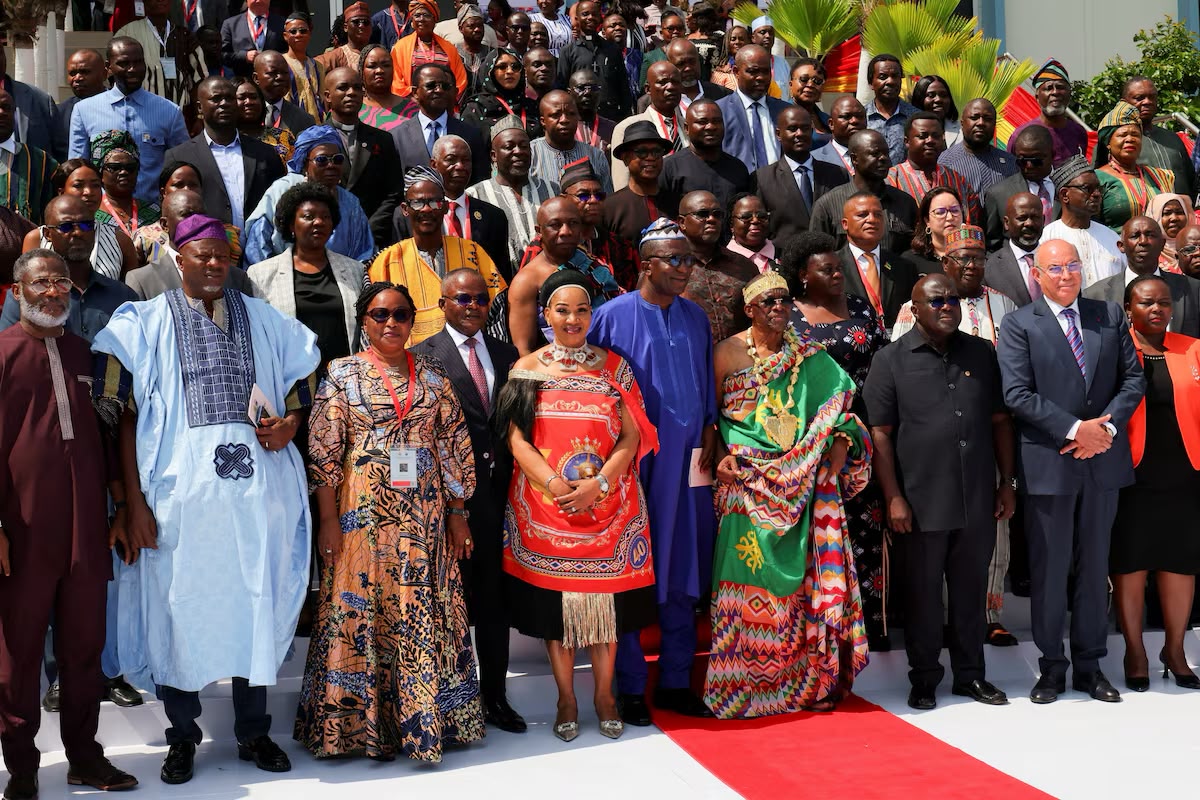 Participants pose for a group photo during the 4th African Inter-Parliamentary Conference on Family Values and Sovereignty, in Accra, Ghana, June 3, 2026. Image@ REUTERS/Francis Kokoroko/File Photo
Organisers did not specify how many of the attending delegations plan to act on the charter’s recommendations by tabling legislation at home. More than half of Africa’s 54 countries already criminalise consensual same-sex relations, and a handful, Uganda and Senegal among them, have gone further still, outlawing the “promotion” of LGBT identity, a path Ghanaian lawmakers followed in late May.
A Continental Shift, With Foreign Roots
Participants described the Accra meeting as part of a broader hardening of anti-LGBT sentiment across the continent, one they said has been actively encouraged by conservative figures in the US and Europe and has picked up steam since Donald Trump’s return to the White House. Several attendees said Trump’s presidency, in contrast to the administrations of Barack Obama and Joe Biden, has opened space for their agenda, since it does not fold LGBT rights into US foreign policy.
Former Ugandan lawmaker Sarah Opendi captured that sentiment from the conference floor: “Let us first thank the American people for voting for President Trump. The conversation in America today is different.” Her comments echoed a line from the US State Department, which has said Washington’s current approach to foreign aid ensures taxpayer money isn’t “wasted on divisive social and gender issues.”
Ghana’s Parliament Speaker, Alban Bagbin, used his opening address to press delegates to turn rhetoric into law once they returned home. “When you return to your respective capitals, let the resolutions we adopt here not gather dust in the archives of our secretariats. Let them be translated into active bills, robust budgetary allocations, and rigorous oversight,” he said, urging lawmakers to “go home and tell your people that their representatives have resolved to protect the sanctuaries of their homes, the heritage of their ancestors, and the sovereignty of their nations.”
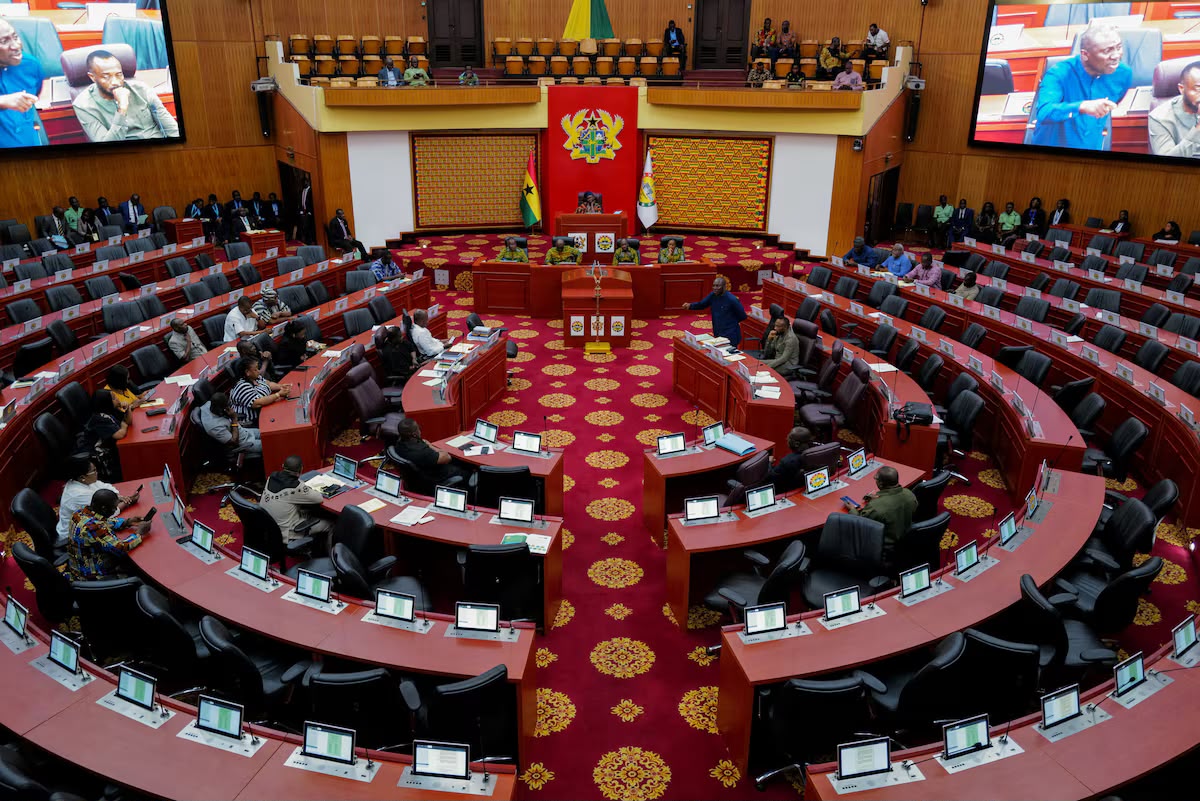 Ghanaian lawmakers attend a parliamentary session on the Human Sexual Rights and Family Values Bill in Accra, Ghana, May 29, 2026. Image@ REUTERS/Francis Kokoroko/File Photo
Among the foreign voices on the conference programme was Henk Jan van Schothorst, the Dutch executive director of Christian Council International, who pressed African governments to resist outside pressure to outlaw conversion therapy, the discredited practice of trying to change a person’s sexual orientation. Framing such bans as Western interference, he told delegates: “These policies are not only reserved for the Netherlands and for Europe. They are coming to Africa,” describing them as “ideological colonisation” by Western powers. A separate presentation by Kenyan doctor Wahome Ngare offered widely disputed definitions, describing a homosexual as “the young man sexually molested by the father” and a transgender person as “the young lady sexually molested by strangers.”
Reuters journalists who spoke with five conference participants and reviewed more than 100 pages of presentation material were unable to establish what role, if any, foreign activists played in shaping the agenda, nor did they find evidence of foreign funding behind the gathering. Sharon Slater, president of the US-based Family Watch International, which has attended past editions of the conference in Uganda, said she had been invited this year but did not attend.
Health Risks and a Community on Edge
Public health officials have repeatedly warned that criminalising LGBT identity drives people away from medical care, including men who have sex with men, a group already facing higher rates of HIV than the general population. In Senegal, reports in April pointed to a drop in patients visiting HIV treatment centres amid a wave of arrests that coincided with debate over that country’s own anti-LGBT law.
In Ghana, the political momentum has already changed daily life for LGBT residents. “I constantly self-censor, hide, watch my back. That’s not safety, that’s survival,” said an African photographer who has lived in Accra for years. “So yes, leaving has crossed my mind. That breaks my heart because Ghana is my home.”
Reports in March linked the US “pro-family” group MassResistance to activists in Ghana who backed the criminalizing sation bill, as well as to campaigners behind Senegal’s law.
Bill Awaits Mahama’s Signature
Ghana’s measure now sits with President John Dramani Mahama, who has previously signalled he would sign such legislation but more recently cited procedural concerns, including questions over whether parliament had a quorum when the bill passed. A coalition of more than 100 African civil society organisations has urged him to reject it, warning that signing would let “external actors with resources and reach to shape its domestic legislation.”
The Accra gathering was the fourth in a series that began in Uganda, whose 2023 Anti-Homosexuality Act, among the harshest anti-LGBT laws in the world, has served as a reference point for the broader movement. Not every country at the table backed the outcome: South Africa and Mozambique declined to endorse the charter, breaking from the 20 nations that signed on.
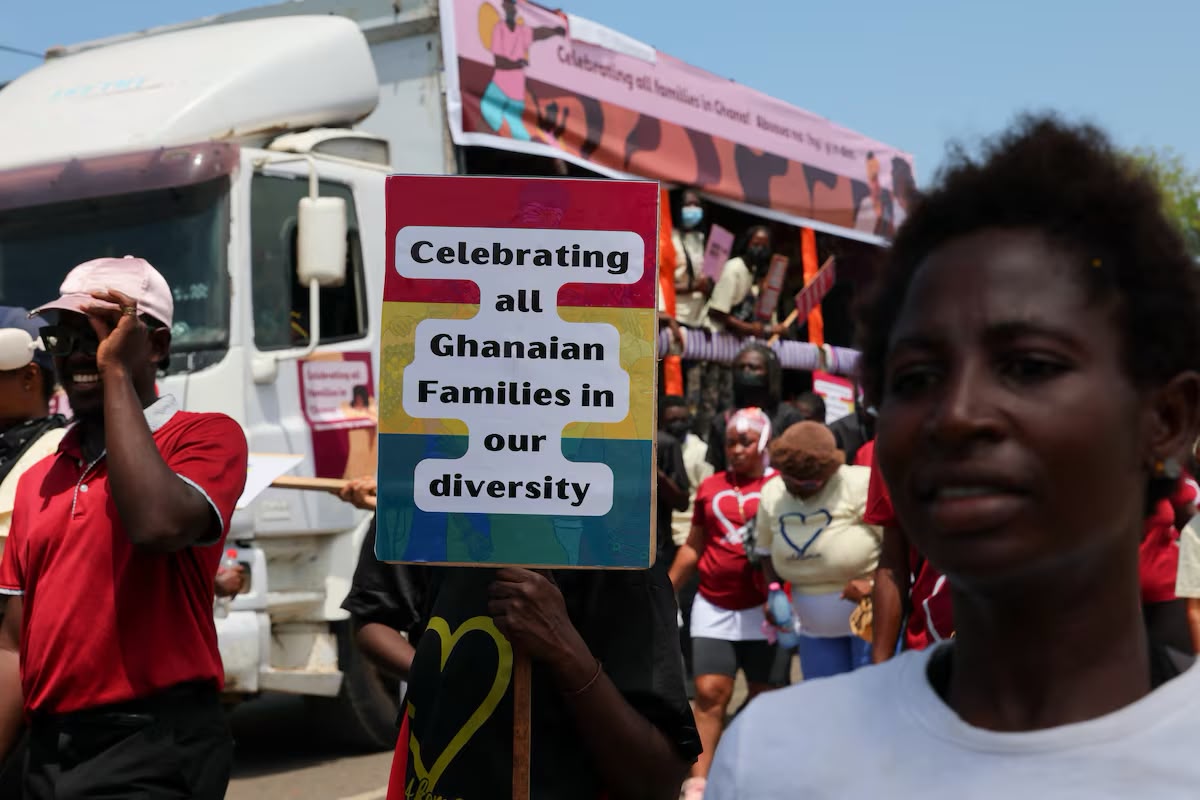 People march in the streets to promote diversity and inclusive family values as Ghana hosts the 4th African Regional Inter-Parliamentary Conference on Family Values and Sovereignty in Accra, Ghana, June 5, 2026. Image@ REUTERS/Francis Kokoroko
Rights groups, including the International Planned Parenthood Federation’s Africa region, condemned the charter’s adoption, describing “family values” and “sovereignty” as being deployed as political tools to justify excluding and discriminating against LGBT people, women and girls across the continent.
By: Andrews Kwesi Yeboah