

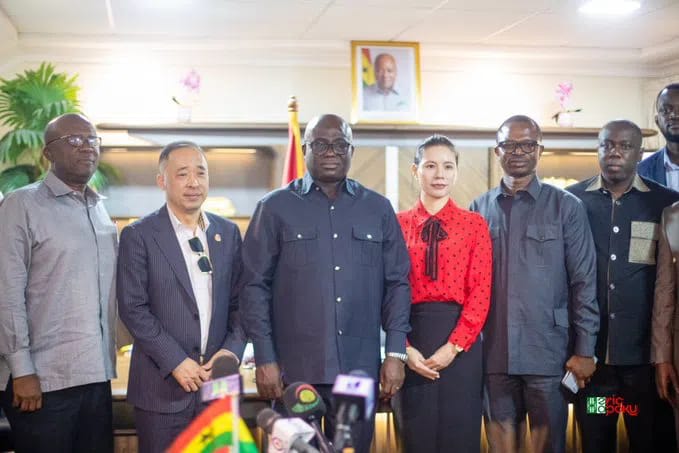
The Ministry of Food and Agriculture (MoFA) in Ghana, under the leadership of Eric Opoku, has formalized a strategic Memorandum of Understanding (MoU) with Sentuo Group Limited, an international industrial and investment firm based in Ghana, to advance large-scale agro-processing and fertilizer manufacturing throughout Ghana.
The agreement, announced today in Accra, aims to transform the agricultural landscape by transitioning from the export of raw materials to fostering a value-driven, industrialized economy.

The collaboration is set to establish modern agro-processing facilities and a national fertilizer production plant, focusing on key crops including cashew, maize, rice, soybean, and oil palm.
During the signing ceremony, Mr. Opoku characterized the partnership as a pivotal moment for the agricultural sector. “This collaboration signifies a fundamental shift towards creating a robust agro-industrial economy that generates value, employment, and prosperity for our citizens,” he stated.
The fertilizer aspect of the agreement is particularly noteworthy, as Ghana has historically relied on imports for agricultural inputs. The new initiative aims to mitigate vulnerability to global price swings and supply chain disruptions.
“With this accord, we are making significant strides toward achieving fertilizer self-sufficiency,” the Minister emphasized, highlighting the importance of local production in stabilizing supply and lowering costs for farmers.
As part of the arrangement, Sentuo Group will be responsible for financing, designing, constructing, and operating the facilities through a Public-Private Partnership model, while the government will offer policy guidance and regulatory support.
The project is also anticipated to incorporate warehousing, packaging, and export systems to enhance Ghana’s competitiveness in international markets while minimizing post-harvest losses and increasing export revenues.
The initiative aligns with broader governmental strategies such as the 24-hour economy agenda, which seeks to industrialize agriculture and create employment opportunities across the value chain.
The partnership is expected to bolster these efforts by establishing sustainable local production capabilities, alleviating foreign exchange pressures, and enhancing food security in the nation.
By: Magdalene Agyeiwaa Sarpong