

The Government of Ghana is set to begin diplomatic discussions with Burkina Faso following the latter’s decision to suspend the export of fresh tomatoes. The move is anticipated to disrupt the supply of tomatoes in the Ghanaian market.
In a statement released yesterday, the Ministry of Trade, Agribusiness and Industry highlighted that the discussions will aim to address concerns regarding the export ban while seeking a mutually beneficial solution. The Ministry underscored the significance of the longstanding trade relationship between both countries, stating Ghana’s substantial reliance on tomato imports from Burkina Faso.
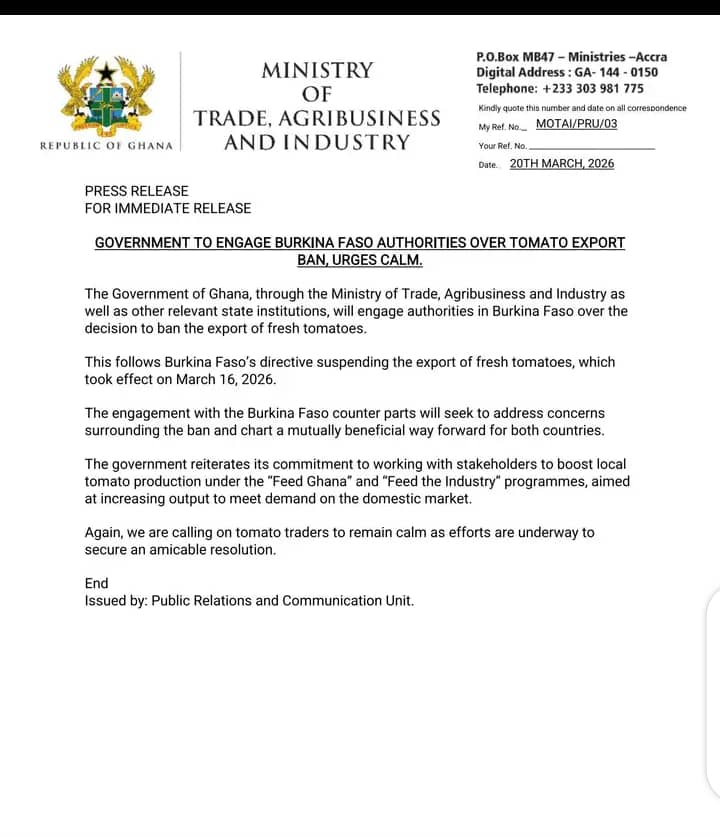
The government also assured that it is working with relevant state agencies and industry stakeholders to mitigate the potential effects of the export suspension. Various measures are being considered to stabilize supply in the short term.
”The government reaffirms its commitment to collaborating with stakeholders to enhance local tomato production through the ‘Feed Ghana’ and ‘Feed the Industry’ programs, which aim to increase output to meet domestic demand,” the statement read.
Authorities have urged tomato traders to remain calm as negotiations progress, expressing optimism that discussions will lead to a favorable resolution and the resumption of normal trade flows.
Meanwhile, in a joint announcement made in Ouagadougou on Thursday, March 19, the Burkinabè government issued an immediate nationwide stop to tomato exports “until further notice,” mentioning the need to prioritize domestic supply for local processing industries.
The directive, declared by the country’s trade and agriculture ministries, includes the suspension of Special Export Authorisations (ASE), effectively ceasing formal export channels for tomatoes. However, traders with ongoing permits have been granted a two-week grace period to finalize ongoing transactions, after which all authorizations will be revoked.
Burkinabè authorities warned that any violations of the directive would result in sanctions under current laws, and seized goods would be redirected to local processing facilities to support domestic agro-industrial production.
By: Magdalene Agyeiwaa Sarpong