

The German Development Cooperation, in collaboration with Scania West Africa, has introduced a programme aimed at increasing female participation in Ghana’s heavy transport industry, particularly within the mining sector.
The initiative, dubbed the Empowering Women in Mining Transport Project, seeks to equip women with specialised driving competencies and connect them to employment opportunities through partnerships with businesses operating in the industry.
Under the programme, 80 participants will undergo professional training and obtain certification in heavy-duty vehicle operation.
An additional 200 women will benefit from courses covering business development, computer skills, occupational protection, mining procedures and the prevention of sexual misconduct at work.
The intervention is expected to address the shortage of female representation in commercial trucking while supporting safer road operations, improved logistics and greater efficiency among mining firms and their contractors.
Ghana’s extractive industry relies heavily on transportation networks to move equipment, minerals and other essential materials. However, women have traditionally had limited access to technical positions and large-vehicle driving careers within this field.
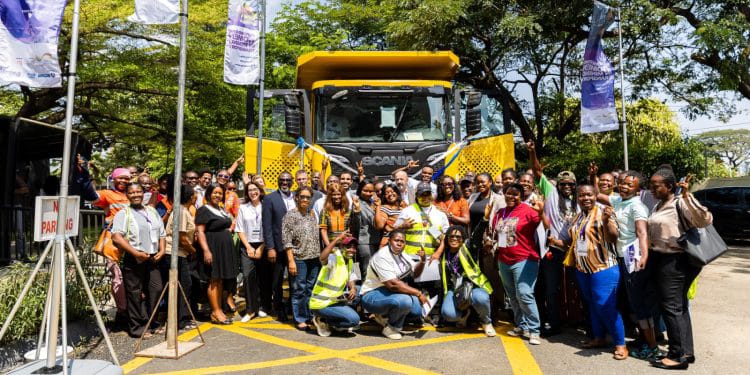 A group picture of German Development Cooperation officials and some female beneficiaries
The programme is being executed by the Deutsche Gesellschaft für Internationale Zusammenarbeit (GIZ) GmbH on behalf of Germany’s Federal Ministry for Economic Cooperation and Development (BMZ).
Funding is provided jointly by the German government and Scania West Africa through the develoPPP initiative, with Reach for Change and Women in Mining serving as partners.
Addressing participants at the inauguration, Head of Cooperation at the German Embassy, Johanna Klotz, emphasised the importance of creating opportunities that remain beneficial beyond the project’s duration.
She explained that combining German technical expertise with corporate involvement would help transform women’s capabilities into recognised qualifications, stable employment and long-term financial independence.
Similarly, GIZ Country Director Sandra Retzer stressed that the programme’s effectiveness would be determined by how many beneficiaries secure meaningful employment rather than simply completing their courses.
She indicated that the organisation was committed to ensuring graduates could access sustainable careers, earn regular incomes and improve their economic circumstances.
Meanwhile, Scania West Africa Managing Director, Francois Lechat, said greater female representation would contribute to a stronger and more sustainable transportation industry.
He reaffirmed the company’s commitment to providing participants with the necessary technical abilities, confidence and professional credentials to compete in occupations previously dominated by men.
The project forms part of broader efforts to promote gender equality, strengthen vocational competencies and encourage private-sector participation in Ghana’s economic development.
Through its employment-focused approach, the partnership seeks to open new career pathways for women while addressing the growing workforce requirements of the country’s mining and logistics industries.
By: Magdalene Agyeiwaa Sarpong