

The damaged boat washed ashore on a beach
Authorities in Senegal have intensified efforts to locate missing passengers following a maritime disaster involving a vessel believed to have been transporting approximately 100 people.
Initial accounts confirmed one fatality, although local news outlets later indicated that the death toll had risen to at least four after additional bodies were retrieved. Several passengers remain unaccounted for.
The badly damaged wooden craft was discovered along the shoreline near Yenne, a coastal community south of Dakar, with passengers’ belongings scattered around the wreckage. Emergency teams conducted searches throughout Wednesday, with further operations scheduled for Thursday.
The incident occurred fewer than 14 days after another migrant vessel sank near Thieppe in north-western Senegal, claiming at least 39 lives.
According to Oumar Sow, an aide to the local traditional leader, the latest accident took place at approximately 2:00 a.m. Survivors’ desperate calls for assistance could reportedly be heard from the shore.
The Agence France-Presse (AFP) quoted a rescued passenger as telling police that roughly 100 individuals were aboard, including five females.
Investigators examining the remains retrieved identification papers, mobile devices and other personal effects, among them a document confirming school registration.
Meanwhile, President Bassirou Diomaye Faye raised concerns about the growing number of citizens embarking on unauthorised sea journeys during Wednesday’s cabinet session.
He directed the Interior Ministry to investigate the underlying causes of the departures and submit recommendations outlining possible interventions to prevent further tragedies.
Following the previous fatal incident, the Senegalese leader had appealed to residents to abandon attempts to reach Europe through perilous maritime routes.
Thousands of West Africans have lost their lives or disappeared while seeking better living conditions abroad, escaping economic hardship, political repression and armed conflicts.
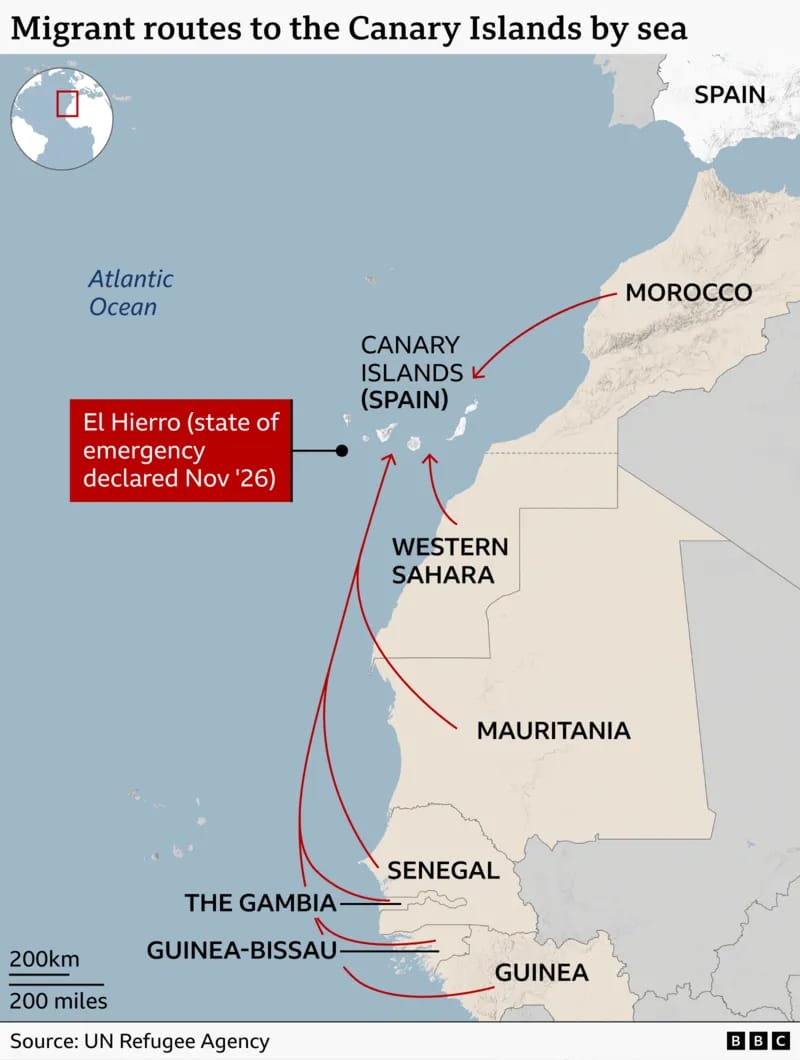
The International Organization for Migration (IOM) reported last month that at least 454 people had died or gone missing along the West African maritime corridor since the beginning of 2026. The agency cautioned that the actual number could be considerably higher because numerous vessels vanish without any trace.
Increasing border restrictions across North African routes, alongside stronger migration partnerships between European and African governments, have prompted more travellers to pursue alternative passages towards Spain’s Canary Islands.
Many undertake the journey aboard overcrowded wooden fishing vessels, commonly called pirogues, which lack the necessary safety features for extended crossings of the Atlantic.
United Nations figures indicate that Senegalese nationals account for the largest proportion of migrants reaching the Canary Islands this year.
The IOM attributes the departures to unemployment, pressure from relatives and established migration connections that encourage people to seek opportunities overseas.
On November 7, authorities on El Hierro, one of Spain’s Canary Islands, declared an emergency following a sharp rise in arrivals. More than 3,300 migrants reportedly landed on the island in approximately 30 boats within the first week of November, representing nearly one-third of its resident population.
By: Magdalene Agyeiwaa Sarpong