

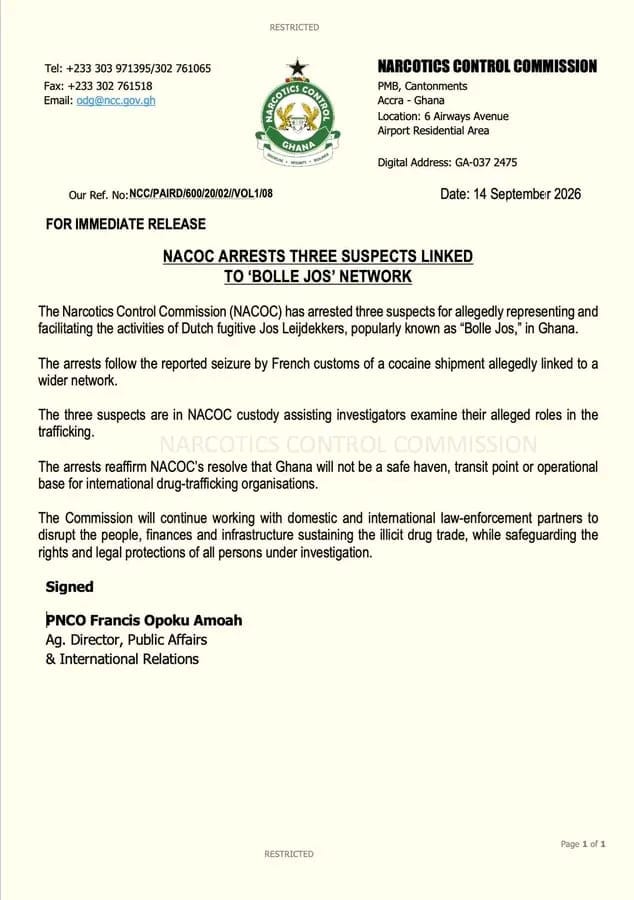
Ghana’s Narcotics Control Commission (NACOC) has detained three individuals suspected of having connections to the alleged ‘Bolle Jos’ cocaine trafficking network.
The arrests follow the confiscation of a cocaine consignment by French customs authorities, which has triggered investigations into the alleged international drug operation.
NACOC said the three suspects remain in its custody and are cooperating with investigators as authorities seek to establish their respective involvement in the case.
The Commission indicated that the detentions form part of broader efforts to uncover the activities of the network and determine the circumstances surrounding the intercepted shipment.
It reiterated its resolve to prevent Ghana from being used as a destination, passageway or base for organised narcotics operations.
NACOC also assured that individuals under investigation would be afforded all rights and safeguards guaranteed by law throughout the proceedings.
The development comes at a time of heightened attention over Ghana’s alleged involvement in cross-border drug trafficking, following several significant narcotics interceptions involving consignments reportedly connected to the country.
Meanwhile, Ghana’s Minority caucus in Parliament has demanded an independent parliamentary investigation into what it describes as the country’s increasing role as a narcotics transit centre under the current National Democratic Congress (NDC) government.
In a statement dated September 13 and signed by the Ranking Member of Ghana’s Parliament’s Defence and Interior Committee, Rev. John Ntim Fordjour, the Minority pointed to the French seizure of cocaine worth more than $260 million.
The drugs were reportedly concealed inside a container carrying plastic waste.
The caucus also referenced other prominent narcotics cases, arguing that the incidents expose weaknesses in drug-control measures, port security and institutional supervision.
According to the Minority, narcotics seizures associated with Ghana during the Mahama administration have collectively exceeded $1 billion in value within less than two years.
By: Magdalene Agyeiwaa Sarpong