

A group of survivors and relatives of victims of South Africa’s infamous Sharpeville massacre have launched a legal challenge aimed at removing a decades-old law that shielded those responsible from prosecution.
Among those seeking justice is 86-year-old Abraham Mofokeng, who still lives with injuries sustained when police opened fire on demonstrators in Sharpeville on 21 March 1960.
Mofokeng, who was 20 at the time, was struck in the leg and still has a bullet lodged in his spine.
He recalls joining thousands of black South Africans protesting against apartheid-era pass laws, which severely restricted their movement.
He said the system treated black people as a source of labour while denying them basic freedoms and the right to challenge government authority.
The demonstration was organised against the compulsory passbooks, commonly called “dompas”, which black South Africans were required to carry.
Anyone found without the document could face arrest, imprisonment or physical punishment.
Witnesses said the gathering was intended to remain peaceful, but the situation descended into violence after heavily armed police opened fire on the crowd.
At least 69 people were officially recorded as having died, while more than 200 others sustained injuries.
Later research by South African academics has suggested the death toll could have been as high as 91.
Survivors have described scenes of people fleeing in panic as officers fired into the gathering.
Some victims were shot while attempting to escape, while others were reportedly attacked with machetes.
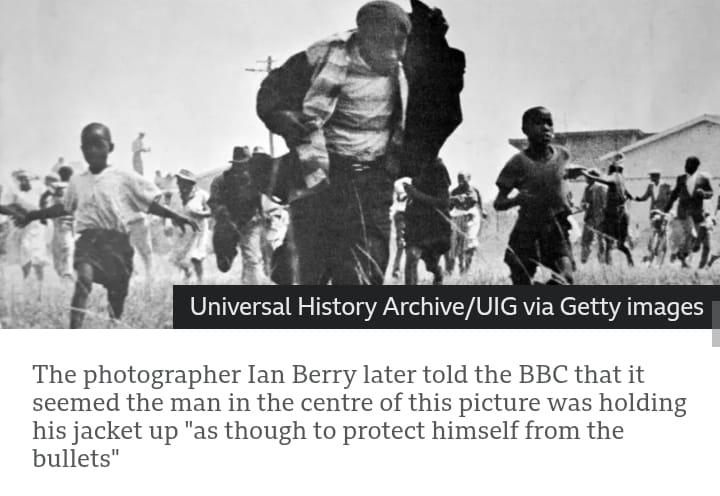
Historical records indicate that more than 1,300 rounds were discharged during the incident.
The massacre became a defining moment in the struggle against apartheid, drawing international attention to the brutality of South Africa’s white-minority government.
Despite the scale of the killings, no police officers were prosecuted for the deaths. An attempt to prosecute demonstrators for public disorder also failed.
A year after the massacre, the apartheid authorities enacted the 1961 Indemnity Act.
The legislation protected the state and security forces from criminal proceedings and civil claims connected to the Sharpeville shootings.
More than three decades after apartheid ended, the legislation remains in force.
Lawyers for Human Rights, working alongside British legal firm Leigh Day, has now approached South Africa’s High Court seeking to have the law declared unconstitutional under the country’s post-apartheid constitutional framework.
The legal action also seeks approval for a class-action case that could allow around 70 survivors and relatives of those killed to pursue compensation and other forms of redress collectively.
Lawyer Charne Tracey said the affected families were seeking more than financial compensation, arguing that meaningful reparations could help address the lasting consequences of the massacre.
She said residents believed their community had been neglected and that little had been done to improve their living conditions or assist them in overcoming the effects of decades-old trauma.
Constitutional law scholar Professor Frans Viljoen said abolishing the legislation would help South Africa remove remnants of its apartheid past from the legal system.
He explained that although the country adopted a new constitution in 1994, laws inherited from the previous regime remained valid until they were formally repealed or amended.
Sharpeville itself continues to bear visible signs of deprivation.
Roads that were once paved have deteriorated, while many ageing houses remain from the apartheid period. Rubbish is scattered across parts of the township, where dry and undeveloped land is also common.
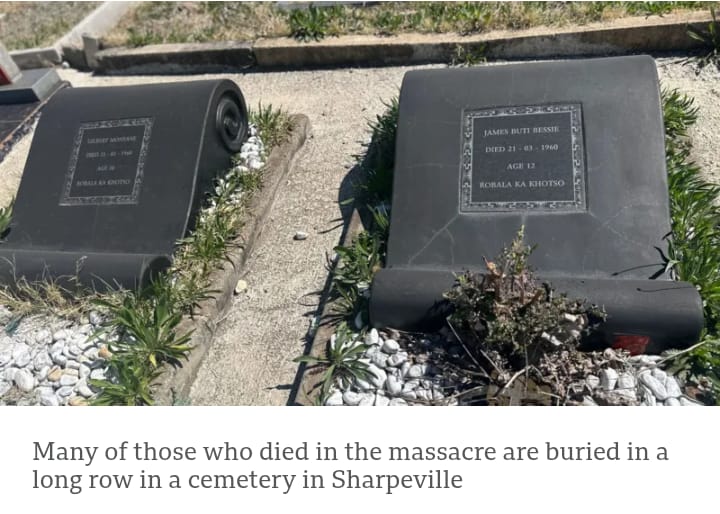
At the Human Rights Precinct, 69 white columns commemorate those officially recognised as having been killed during the protest.
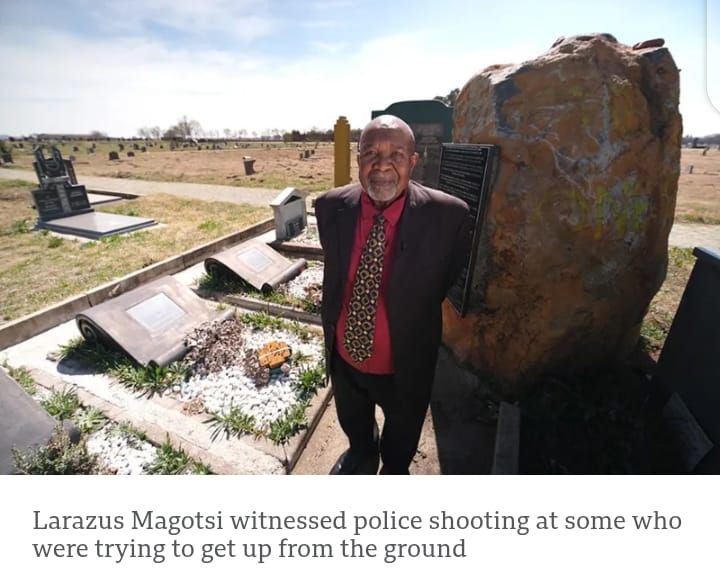
Among the survivors is 90-year-old Larazus Magotsi, who remembers hiding in a shop after hearing gunfire. He said he later saw bodies lying across the streets and witnessed police shooting at people who were attempting to rise.
The massacre’s legacy was also examined by South Africa’s Truth and Reconciliation Commission (TRC), established after the country’s transition to democracy.
However, survivors have criticised the process for failing to deliver criminal accountability for the Sharpeville killings.
No police officer involved in the shootings is known to have sought amnesty through the TRC process.
South Africa’s government said it had provided assistance to victims of apartheid-era abuses and would continue supporting them.
It added that it would not prevent survivors or relatives from seeking legal remedies through the courts.
The Justice Department said 560 people recognised by the TRC as victims of apartheid-related violence had received individual grants totalling about $31 million.
It also urged people connected to Sharpeville who had not yet been identified to come forward.
For survivors such as Mofokeng, however, financial assistance alone cannot erase the memories of that day.
He believes a successful court case could finally provide closure for victims, their families and generations yet to come.
“Apartheid is dead and buried,” he said, adding that many people had still not fully recovered from the suffering caused by the massacre.
By: Magdalene Agyeiwaa Sarpong