

As Ghana marks 69 years of independence, a key concern raised by agronomist and politician Abu Sakara Foster is not only how far the country has come, but how many young people still cannot find work.
Speaking on The Pulse on JoyNews on March 6, Dr. Sakara said Ghana has made progress in several areas since independence. However, he believes the country still faces deep problems, especially when it comes to jobs and industry.
He said Ghana’s economy has changed over the years but has not built enough factories and industries to create work for its growing youth population.
“Clearly, we have not yet reached where we should be, but we have made a lot of progress. I think on the economic side, we have transitioned our economy towards a more mixed economy, but we didn’t achieve industrialization. We have not achieved it yet, so we’re still behind compared to our contemporaries,” Dr Abu Sakara said.
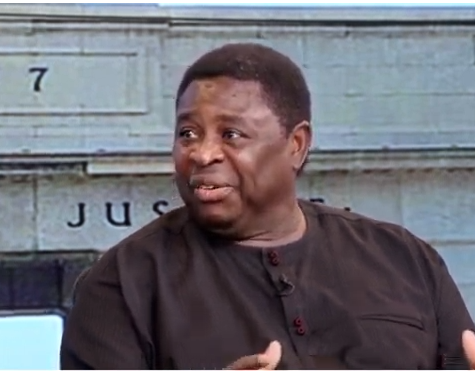
Dr. Abu Sakara
According to him, the lack of industry is closely tied to the high number of young people without jobs. Many students finish school every year, but the economy cannot absorb them.
“On the social side, there’s a lot of youth unemployment, and that is coupled with the lack of industrialization. Although we’ve made progress through the foundation of universal primary education, we’re now training people not for our economy, but to export them because we have high youth unemployment. You will have that if you don’t have industrialization, because the service sector cannot absorb all of them, and even those absorbed by the service sector are being absorbed to service other people’s industrial growth. So there we have a big task to do,” he explained.
Despite these concerns, Dr. Sakara praised Ghana’s political record since independence. The country has seen several peaceful transfers of power, something he says has helped build its reputation around the world.
“On the political side, of course, we’ve made a significant gain. We’re known as the beacon of stability in our neoliberal democracy, and of course, with various changes, peaceful changes of government, so that is a good plus in our cap,” he added.
He also spoke about how Ghana’s position in world politics has changed over time. In the early years after independence, the country strongly promoted Pan-African unity. Today, he said, Ghana works with many global partners and is trying to build new relationships.
“I think if you look at the geopolitical stance, we went from a purely Pan-Africanist view, now we have a more non-aligned view, the one in which we have a more multilateral approach, and some will even say that we have aligned ourselves a little bit more with the West,” he said.
He added that Ghana may also deepen cooperation with countries in the Sahel region while adapting to a changing global system.
“I think that with the reset agenda, we hope that we’ll come back, especially as we are now trying to build bridges with our AES colleagues, that we’ll come back more towards our core Pan-African agenda, and also begin to look seriously at facing a new multipolar world in which it may not necessarily be a question of non-alignment, but advantageous collaboration with those who will take us furthest.”
Looking at the bigger picture, Dr. Sakara said Ghana has moved forward since independence but still has a long road ahead.
“I think we have made significant progress, but a question is not whether you’re on the right path or not. It is whether you are where you are supposed to be. Is this your sitting place, compared to where you should be?”
He also pointed to the income gap between Ghana and more developed economies. Ghana’s income per person is about $2,000, far lower than some countries where it is tens of thousands of dollars.
“Money is not everything, but it drives many other outcomes,” he said.