

Spanish Prime Minister Pedro Sánchez has announced that Spain will hold an early general election on 29 November 2026, following a major parliamentary setback over proposed measures to ease the country’s housing problems.
The decision came after lawmakers rejected two government decrees designed to strengthen safeguards for renters, highlighting the difficulty faced by Sánchez’s minority administration in securing parliamentary backing.
The housing dispute intensified after 87-year-old Maricarmen Abascal was removed from her Madrid residence following a steep increase in her monthly rent.

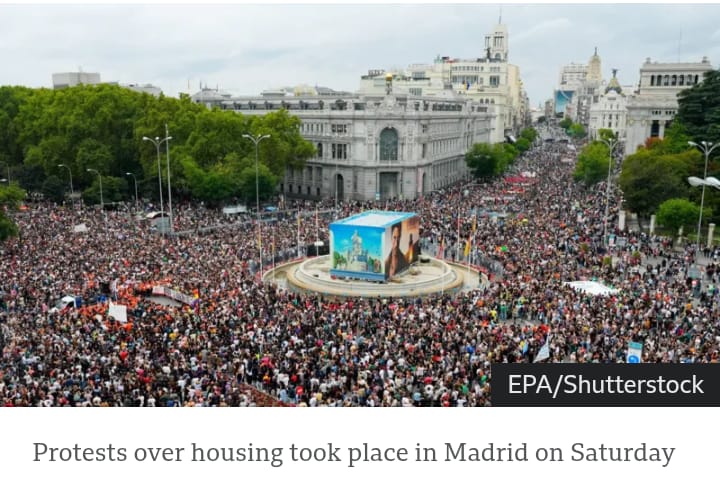
The case triggered demonstrations across several Spanish cities, with protesters demanding stronger protections for tenants.
Sánchez said his administration required a wider progressive majority in Parliament to advance its programme, while acknowledging that his government had fallen short on some of its commitments.
The defeated proposals included measures concerning evictions, rental agreements, tourist accommodation and property purchases by investment groups.
Opposition parties argued that increasing housing supply, rather than imposing additional regulations, would provide a better solution to rising costs.
The prime minister is also facing pressure from corruption investigations involving people within his political circle, as well as criticism over the government’s handling of the migration situation in Ceuta.
Sánchez’s Socialist Party governs alongside the Sumar alliance but lacks an outright majority, forcing it to depend on support from smaller political groups to pass legislation.
The forthcoming contest will take place earlier than originally expected, with Spain’s next general election previously scheduled for no later than 2027.
Opposition leader Alberto Núñez Feijóo of the People’s Party welcomed the announcement, saying voters would finally have an opportunity to determine the country’s political direction.
The November poll is therefore set to focus heavily on housing affordability, the cost of living, migration, corruption allegations and the ability of the next government to secure stable parliamentary support.
By: Magdalene Agyeiwaa Sarpong