

Nigeria’s football fortunes have come under renewed scrutiny, with former international Segun Odegbami describing the current period as the “worst time” in the country’s football history.
Odegbami, who helped Nigeria win its first Africa Cup of Nations title in 1980, said the difficulties extend beyond the senior national team and reflect wider problems within the country’s football system.
The Super Eagles and Super Falcons have both failed to qualify for their respective FIFA World Cups within the past year, while Nigeria’s junior sides and clubs have also struggled in continental competitions.
Although the country recently reached the quarter-finals of the FIFA Under-20 Women’s World Cup, Odegbami believes the overall decline signals a major turning point.
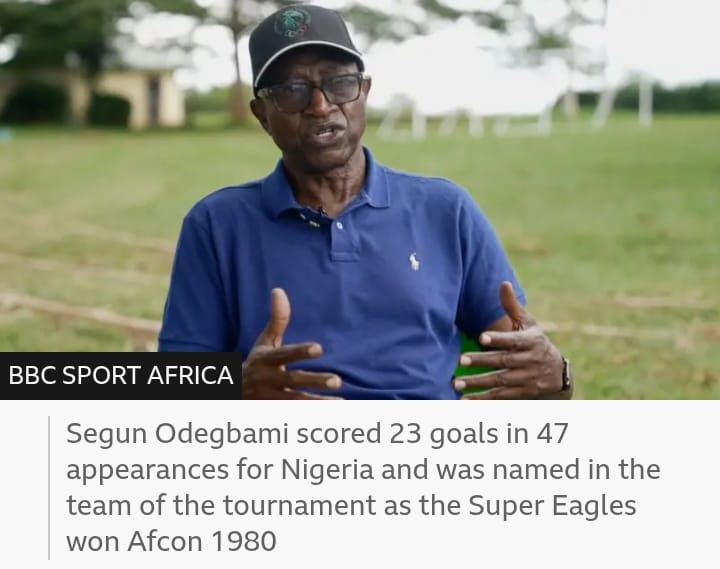
“It has never been this bad in our entire history that we didn’t qualify for the World Cup,” the 74-year-old told BBC Sport Africa.
He also criticised the performance of the Super Falcons, who failed to win the 2025 Women’s AFCON despite being among the tournament’s leading contenders.
According to Odegbami, financial difficulties affecting the domestic league have further exposed weaknesses in Nigerian football.
The situation has also resulted in significant changes at the Nigeria Football Federation (NFF).
President Ibrahim Gusau, general secretary Mohammed Sanusi and several executive committee members resigned last month following growing criticism.
Odegbami has called for a comprehensive overhaul of the football administration, arguing that Nigeria needs a long-term development plan covering every level of the sport.
FIFA and the Confederation of African Football (CAF) have joined discussions with the National Sports Commission on a proposed restructuring programme.
The NFF elections, originally scheduled for September 27, have been suspended while the reform process continues.
Emmanuel Ikpeme has been named interim general secretary, with Ademola Olajire appointed as his deputy.
Sports journalist Fisayo Dairo said meaningful changes should go beyond replacing officials.
He called for a stronger framework to develop national teams, identify young talent at grassroots level and involve corporate organisations in football administration and financing.
Nigeria’s current difficulties contrast sharply with the country’s successful football era of the 1980s and 1990s.
Odegbami was part of the team that defeated Algeria 3-0 in Lagos to win the 1980 AFCON.
Nigeria later claimed continental titles in 1994 and 2013, while finishing runners-up in 2023 and third in 2019 and 2025.
However, Odegbami said successive governments have failed to make sports development a consistent priority, while weaknesses in administration have affected player development, coaching, academies and domestic clubs.
He also expressed concern over the deteriorating condition of several historic Nigerian stadiums, including the National Stadium in Lagos, Obafemi Awolowo Stadium in Ibadan, Ahmadu Bello Stadium in Kaduna and UJ Esuene Stadium in Calabar.
He said the decline of the facilities represented a loss of an important part of Nigeria’s sporting heritage.
The Super Eagles are set to open their 2027 AFCON qualifying campaign against Madagascar at the Godswill Akpabio Stadium in Uyo on Friday at 16:00 GMT.
They will then travel to Guinea-Bissau for their second qualifying fixture on September 29.
Former African Footballer of the Year Victor Osimhen will miss the matches after being ruled out through injury.
By: Magdalene Agyeiwaa Sarpong