

Germany is grappling with mourning and growing public outrage following the deadly assault at Berlin’s Pride celebrations on Saturday night that claimed the life of a Polish woman and left at least 29 others injured.
Authorities identified the suspected attacker as 21-year-old Abdul Ballout, a German national of Lebanese descent.
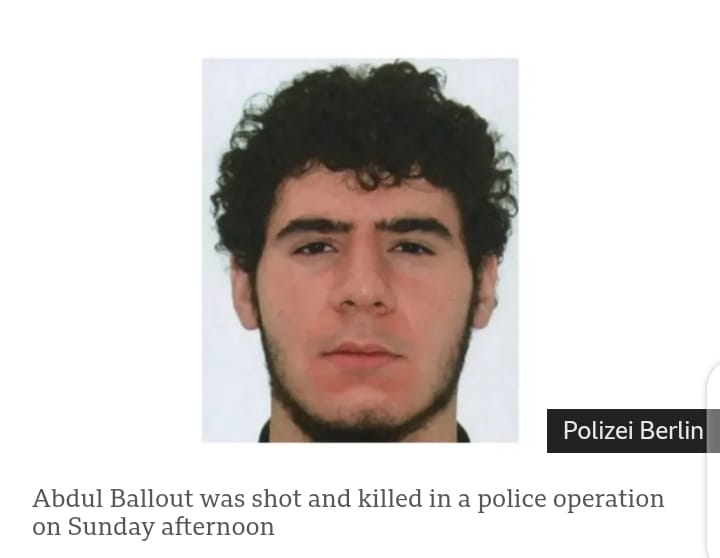
He was fatally shot by police on Sunday after the incident.
Interior Minister Alexander Dobrindt disclosed that Ballout had a lengthy criminal history and had been known to security agencies because of extremist activities and links to Islamist networks.
Investigations revealed that Ballout attempted to travel to Syria in 2025 to join the Islamic State (IS) group.
Prosecutors said he journeyed through Turkey before reaching Lebanon, where he reportedly established contact with individuals he believed were affiliated with the militant organization.
Lebanese authorities arrested him in July 2025, and he received a three-month jail term for promoting religious and sectarian hatred.
After completing his sentence, he returned to Germany in November, where he was detained upon arrival at Berlin Brandenburg Airport.
Earlier this year, a Berlin court sentenced Ballout to one year and ten months under juvenile law after convicting him of preparing a serious act of politically motivated violence.
However, the punishment was suspended while prosecutors sought a harsher sentence, allowing him to remain free under probation supervision.
The court’s decision has drawn widespread criticism from political leaders.
Dobrindt described the suspended sentence as difficult to comprehend given the security concerns surrounding the suspect and confirmed that officials are examining how the ruling came about.
Berlin Mayor Kai Wegner also questioned the handling of the case, saying he was stunned that someone convicted of such offences had been released instead of remaining behind bars.
The far-right Alternative for Germany (AfD) accused the country’s security system of failing to protect the public, arguing that someone already known to police for extremist links should never have been free to carry out such an attack.
German magazine Der Spiegel reported that Ballout had assured judges during his trial that he had abandoned extremist beliefs and rejected violence.
Thomas Mücke, an expert with the Violence Prevention Network, said the suspect appeared calm, cooperative and controlled during meetings with intervention specialists, making it difficult to assess his true intentions.
The attack has renewed calls for tougher counterterrorism measures.
Peter Neumann of King’s College London argued that Germany’s terrorism penalties are relatively light compared with other European countries and suggested reviewing juvenile justice laws to place greater emphasis on public safety.
However, Social Democratic Party lawmaker Sebastian Fiedler maintained that existing legislation is not the main issue.
Instead, he called for a review of how authorities monitored Ballout after his release, including his contacts and whether weaknesses in supervision allowed him to evade closer scrutiny.
Chancellor Friedrich Merz said it was too soon to announce policy changes but assured the public that decisive measures would follow.
He indicated that individuals considered national security risks should face stricter restrictions on their movements if detention is not legally possible.
Merz also questioned why authorities could not monitor the location of high-risk suspects more effectively, despite the availability of modern tracking technology, and instructed the Interior Ministry to examine existing surveillance laws.
By: Magdalene Agyeiwaa Sarpong