

Accra is preparing to receive hundreds of Ghanaians fleeing renewed xenophobic violence in South Africa, as government aircraft begin a fresh evacuation of citizens caught up in months of unrest that has drawn growing scrutiny over the treatment of African migrants.
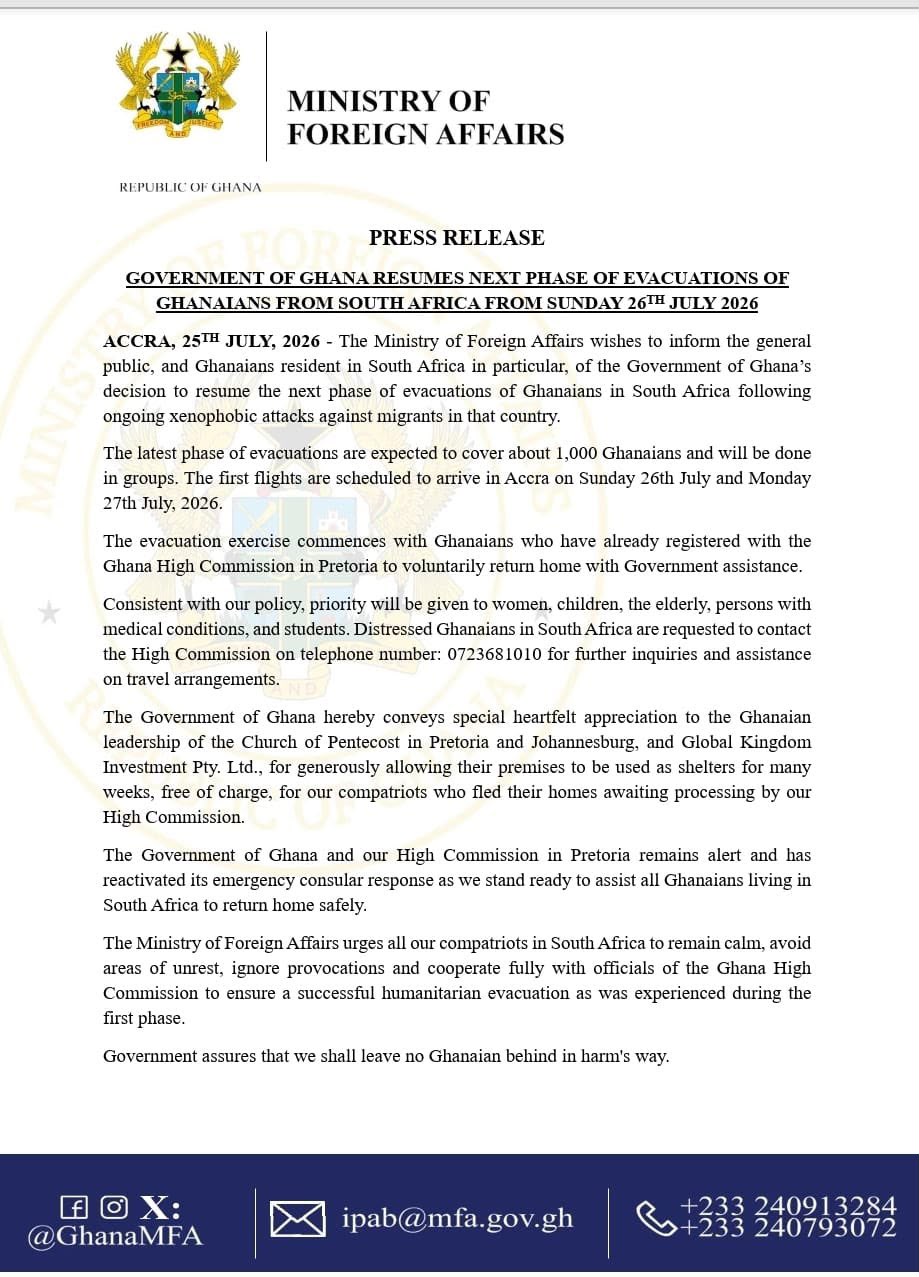
The Ministry of Foreign Affairs said on Saturday, July 25, that about 1,000 Ghanaians will be flown home in phases. The first group is expected to arrive in Accra on Sunday, July 26, followed by a second on Monday, July 27. The operation is the latest in a series of government-led evacuations as attacks on foreign nationals continue in parts of South Africa.
Ghana has already carried out similar rescue missions in recent months. The latest airlift follows earlier evacuations in May and June, reflecting continued concern over recurring xenophobic violence. During a previous phase, Ghana’s High Commissioner to South Africa, Benjamin Quashie, said nearly 926 citizens had returned under the voluntary repatriation programme.
“I know this has been a very difficult period for us in South Africa, especially because of these xenophobic attacks and how our citizens have been treated and continue to be treated,” he said.
The evacuation effort has not been without challenges. A planned airlift of more than 800 citizens was previously delayed because of passenger screening, flight clearances and coordination with South African authorities, highlighting the complexity of moving large numbers of people out of a crisis.
According to the ministry, the current operation will begin with Ghanaians who have already registered with the Ghana High Commission in Pretoria and requested government assistance to return home. Women, children, the elderly, students and people with underlying medical conditions are being given priority.
The airlift also carries diplomatic significance. It follows President John Mahama’s approval of the immediate evacuation of 300 Ghanaians and Ghana’s petition to the African Union over continued xenophobic attacks on African nationals in South Africa. The move has added pressure on the continental body to take a stronger stance on the issue.
As the crisis has unfolded, Ghanaian religious and business organisations have helped support displaced citizens. The government praised the Ghanaian leadership of the Church of Pentecost in Pretoria and Johannesburg, together with Global Kingdom Investment Pty. Ltd., for providing temporary shelter to evacuees while their cases were processed by the High Commission.
The ministry is urging any Ghanaians who have not yet registered but want to return home to contact the High Commission in Pretoria. Emergency consular services have been reactivated to help arrange travel, while those still in South Africa have been advised to avoid areas affected by unrest, refrain from confrontations and remain in close contact with embassy officials.
Beyond bringing citizens home, the government has introduced a reintegration programme that includes financial support, transportation, psychological counselling and access to employment and business opportunities. The package is designed to help returnees rebuild their lives after arriving back in Ghana.
The ministry ended its statement with a message it has repeated throughout the crisis: “Government assures that we shall leave no Ghanaian behind in harm’s way.”
By: Andrews Kwesi Yeboah