

Getty Images
Global oil prices dropped significantly after signs of a temporary reduction in hostilities between the United States and Iran boosted expectations of renewed diplomatic engagement.
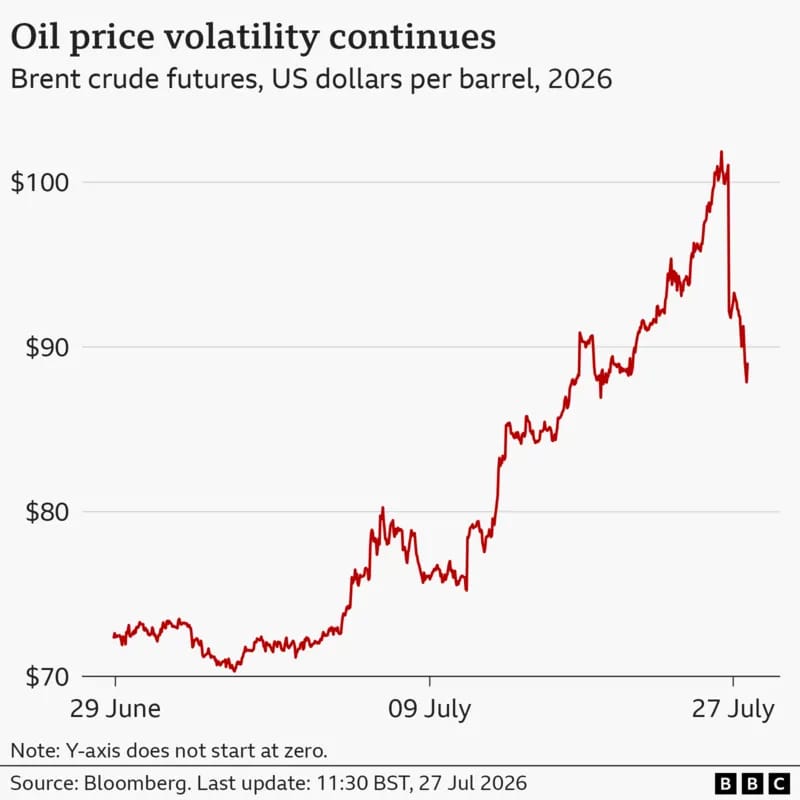
Brent crude, the international benchmark for oil, fell by more than nine percent during trading, slipping below $88 per barrel after climbing above $100 last week amid escalating tensions.
The decline followed confirmation from the US ambassador to the United Nations that military operations against Iran had been suspended for a second consecutive night to allow negotiations to continue.
Iranian military officials also announced that Tehran had paused its retaliatory operations across the region.
The conflict had previously disrupted energy markets after fighting effectively shut down the Strait of Hormuz, one of the world’s busiest oil transit routes, responsible for transporting roughly one-fifth of global oil and liquefied natural gas supplies.
Earlier this year, a memorandum of understanding between Washington and Tehran temporarily restored access through the strategic waterway, sending crude prices back to around $70 per barrel.
However, the breakdown of that agreement earlier this month renewed concerns over supply disruptions, driving prices sharply higher once again.
Market anxiety intensified further after Houthi fighters in Yemen targeted oil tankers navigating the Red Sea, threatening another vital export corridor used by Saudi Arabia as an alternative to the Strait of Hormuz.
Susannah Streeter, Chief Investment Strategist at Wealth Club, said investors remain cautious despite the latest decline in prices, warning that uncertainty surrounding the conflict continues to influence global energy markets.
She noted that traders are still questioning whether ongoing diplomatic efforts will produce a durable settlement, leaving volatility firmly embedded in oil prices.
The rise in crude prices in recent weeks has already translated into higher fuel costs, including petrol and diesel, in several countries.
Increased transport and production expenses have also contributed to rising prices for goods and services, particularly food, adding to inflationary pressures.
Persistent inflation has strengthened expectations that central banks may maintain tighter monetary policies or even raise borrowing costs to contain price growth.
Last month, the European Central Bank increased its benchmark interest rate for the first time in nearly three years, citing inflationary risks linked to the Middle East conflict.
In the United Kingdom, hopes of interest rate reductions have faded as financial markets now anticipate a possible increase later this year.
The Bank of England is expected to leave its benchmark rate unchanged at 3.75 percent when policymakers meet this week, although investors will closely watch for signals on future monetary policy.
By: Magdalene Agyeiwaa Sarpong